There is nothing quite like heading out for a day of fishing with everything perfectly in order. Your rods are ready. Your tackle is sorted. You know exactly where everything is. That kind of calm starts long before you reach the water. It starts at home, with a smart gear setup that works for your space and lifestyle.
However, many anglers overlook the importance of organizing their gear properly. They spend time and money on rods, reels, and lures, but pay little attention to how they store and manage everything. The result is tangled lines, lost hooks, and wasted time before every trip.
This guide will show you how to build a practical, efficient fishing gear setup at home. Whether you have a garage, a spare room, or just a closet, you can create a system that works. Additionally, many of the solutions here are simple DIY storage ideas that cost very little to put together.
Start with a Clear Assessment of Your Gear
Before you build anything or buy any storage products, take stock of what you own. Lay everything out on the floor or a table. Group your items by category. Rods and reels go in one group. Tackle boxes and lures go in another. Lines, weights, hooks, and terminal gear form their own group.
This process is eye-opening for most anglers. You will likely find duplicates, broken items, and things you forgot you owned. Therefore, use this opportunity to declutter. Throw away damaged gear. Donate items you no longer use. A clean inventory makes organizing far easier.
Once you know what you have, you can plan your setup around your actual needs. A fly fisherman will need very different storage than someone who bass fishes with heavy tackle. Tailoring your setup to your style of fishing makes every solution more effective.
Choose the Right Space in Your Home
The best fishing gear setup lives in a dedicated space. Ideally, this is a garage wall, a utility room shelf, or a section of a workshop. However, not everyone has that luxury. A bedroom closet or a corner of the basement works just as well when it is organized thoughtfully.
Think about accessibility. You want gear that you use most often to be the easiest to reach. Store seasonal or rarely used items higher up or further back. Additionally, consider moisture and temperature. Fishing gear can degrade in humid or very hot environments. A cool, dry space helps extend the life of your equipment.
If you plan to make this a longer-term setup, it is worth treating it as a genuine home improvement project. A well-organized fishing station adds real value to your space and makes your hobby more enjoyable every time you engage with it.
Building a Rod Storage System
Rods are the most awkward items to store. They are long, fragile, and easy to knock over. A dedicated rod rack solves all of these problems at once.
Wall-Mounted Rod Holders
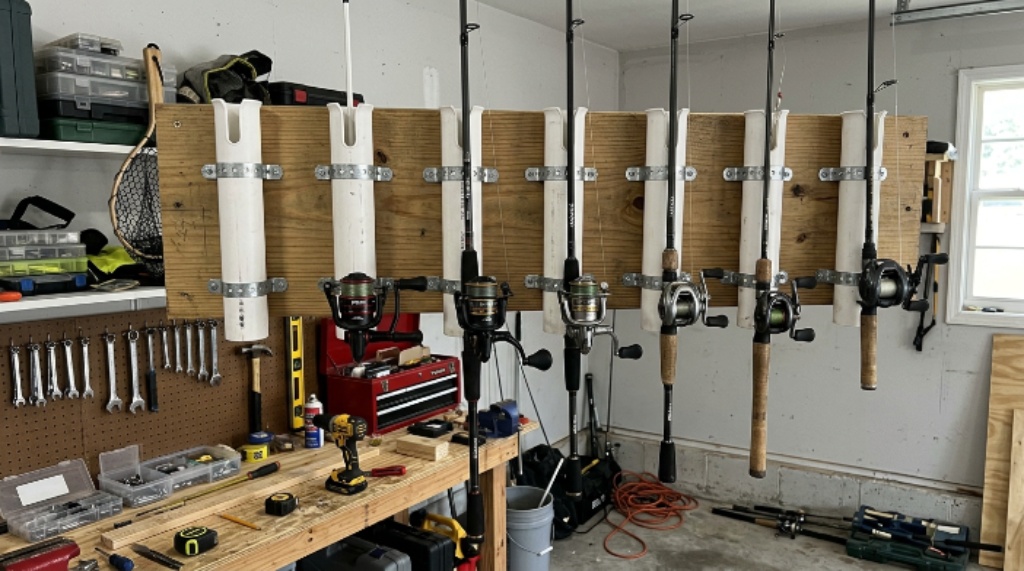
Wall-mounted rod holders are one of the most popular DIY storage solutions for anglers with garage or workshop space. You can build a simple version using PVC pipe cut into short sections and mounted to a wooden board. Attach the board to the wall at a comfortable height. Insert each rod tip-down into a pipe section.
This setup keeps rods vertical, separated, and completely out of the way. It also makes it easy to see every rod at a glance, so you can grab exactly what you need without disturbing the others.
Ceiling Rod Racks
For those with limited wall space, ceiling-mounted rod racks are an excellent alternative. These use two parallel wooden rails with notches or hooks to cradle rods horizontally. The rods rest out of the way above your head, keeping your floor and walls clear.
This approach works particularly well in garages. It keeps long rods safe from accidental damage while making the most of vertical space that would otherwise go unused.
Organizing Your Tackle and Small Gear
Small items like hooks, weights, swivels, and lures are easy to lose and frustrating to find. Therefore, a clear system for sorting and storing them is essential.
Using Tackle Boxes Effectively
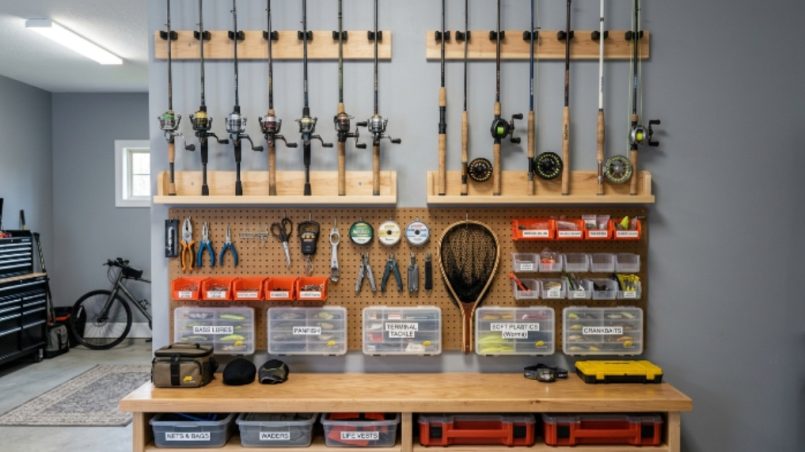
Tackle boxes come in all shapes and sizes. The key is to use them consistently. Assign each box to a specific type of fishing or a specific category of gear. For instance, one box might hold all your bass lures. Another holds freshwater terminal tackle. A third is for saltwater gear.
Label each box clearly on the outside. This saves time when you are packing for a trip. You grab the boxes you need without opening and searching through all of them.
Small Parts and Hardware Storage
Hardware store bins are a brilliant and affordable solution for organizing very small items. These are the same divided bins used for screws and bolts. They work just as well for hooks, split rings, barrel swivels, and snap links.
Mount a pegboard on the wall and hang the bins from it. Additionally, you can use clear, stackable containers with divided compartments. The transparency makes it easy to see what is inside without opening anything.
Setting Up a Line and Reel Station
Fishing line needs to be spooled, stored, and replaced regularly. Having a dedicated station for this task makes the job much faster and more pleasant.
A simple line winder can be mounted to a workbench or table edge. Store spare spools of line in a drawer or on a wall-mounted shelf nearby. Keep scissors, a line clipper, and a knot tool in the same area so everything you need is in one place.
Reels should be stored off the ground and away from direct sunlight. A small shelf with individual compartments works well. You can build one from scrap wood as a straightforward home improvement weekend project that any beginner can complete in an afternoon.
Creating a Gear-Ready Bag or Pack Station
One of the best ways to save time before a fishing trip is to keep a pre-packed bag or vest ready to go. Set up a hook near your gear area where your bag hangs permanently. Stock it with the essentials: a first aid kit, sunscreen, a multi-tool, spare line, and a few reliable lures.
After each trip, restock the bag immediately. This habit means you are always ready to go on short notice. There is no scrambling to find items at six in the morning when the fish are biting.
Additionally, hang your waders, vest, and hat nearby. Group your outdoor clothing with your gear so that getting dressed for a trip is part of a single, seamless routine.
Maintaining Your Setup Over Time
A great fishing gear setup only stays great if you maintain it. After every trip, take ten minutes to put things back where they belong. Rinse any saltwater gear before storing it. Dry everything that got wet. Check for damage and make note of anything that needs replacing.
Do a full reorganization at least twice a year. The start of fishing season and the end are natural times to review everything. Refresh your tackle, inspect your rods for damage, and update your storage as your gear collection grows or changes.
A well-maintained setup reflects respect for the sport and for your equipment. It also saves you money in the long run, because properly stored gear lasts far longer than gear left in a pile.
Budget-Friendly Tips for Building Your Setup
Building a great gear setup does not require a large budget. Many of the best solutions are low-cost or free. Here are some practical ideas to get you started:
- Use leftover lumber from other projects to build rod racks and shelving.
- Repurpose kitchen drawer organizers for sorting hooks and small tackle.
- Use magnetic strips designed for kitchen knives to store small tools and pliers on the wall.
- Hang a pegboard for maximum flexibility. You can rearrange hooks and holders anytime your needs change.
- Shop end-of-season sales for tackle boxes, bins, and shelving units at reduced prices.
Therefore, even on a tight budget, you can put together a functional and well-organized space. The investment in time and materials pays back every single time you head out for a trip without the usual stress and searching.
Conclusion
Creating the perfect fishing gear setup at home comes down to three things: knowing what you have, finding the right space, and building systems that are easy to maintain. Start with a thorough inventory. Then choose your storage solutions based on your actual gear and available space.
Wall-mounted rod holders, tackle box systems, pegboards, and a ready-to-go bag station are all practical solutions that work in almost any home. Most can be built affordably using basic DIY storage techniques and simple materials anyone can work with.
Treat your gear area as a genuine home improvement project and give it the same care you give your equipment. The result will be a cleaner space, faster trip preparation, and more time doing what you love: fishing.
Frequently Asked Questions
1. What is the best way to store fishing rods at home?
The best method depends on your available space. Wall-mounted PVC rod holders are ideal for garages and workshops. Ceiling-mounted racks work well when wall space is limited. The goal in either case is to keep rods vertical or horizontal, separated from each other, and protected from accidental knocks.
2. How do I keep my small fishing tackle organized?
Use labeled tackle boxes grouped by fishing type or gear category. For very small items like hooks and swivels, hardware store divided bins are an affordable and effective solution. Keeping items sorted by type means you can find what you need quickly, even in poor light or when you are in a hurry.
3. How much space do I need to set up a fishing gear station at home?
You do not need a lot of space. A section of wall in a garage, a utility closet, or even a single large cabinet can work well. The key is using vertical space efficiently with wall-mounted storage, shelving, and hooks. A three-foot-wide wall section can hold a surprisingly large amount of gear when organized properly.
4. What materials do I need to build a DIY rod rack?
For a basic wall-mounted rod rack, you need a wooden board, PVC pipe cut into short sections, screws, and a drill. The total cost is usually under $20. For a ceiling rack, you need two wooden rails fitted with notches or hooks and the hardware to mount them securely to ceiling joists.
5. How often should I reorganize my fishing gear setup?
A full reorganization twice a year is a good routine for most anglers. Do one at the start of fishing season to refresh your gear and replace anything worn out. Do another at the end of the season before storing cold-weather or specialty gear. Additionally, spend a few minutes after each trip returning items to their proper place to keep the setup functional day to day.
Related Topics:
How to Organize Surfboard Fins Like a Pro Surfer
How to Choose the Right Surf Fishing Rig for Live and Cut Bait