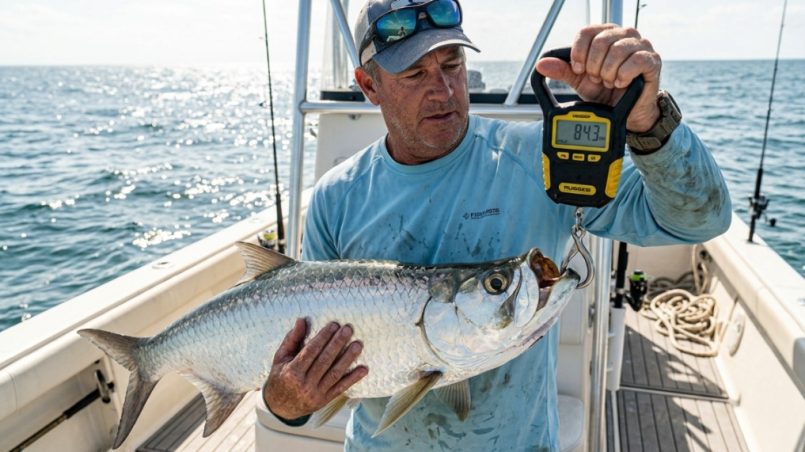
You’ve just landed a monster redfish from the surf, heart pounding, arms shaking. You reach for your scale, but the salt spray has already taken its toll. The screen is fogged up, the buttons are sticky, and the reading is garbage. This is the moment every saltwater angler dreads—the moment your gear fails because it wasn’t built for the fight. Waterproof fish-scale saltwater fishing gear isn’t a luxury; it’s the line between bragging rights and a frustrating guess. Saltwater destroys electronics, corrodes metal, and ruins confidence. Choosing the right scale means understanding IP ratings, material science, and the realities of life on the water. Let’s break down exactly what separates a tool from a toy.
What does “waterproof” really mean for a fish scale in saltwater?
A truly waterproof fish scale for saltwater fishing must be rated at least IPX7, meaning it can be submerged in one meter of water for 30 minutes without damage. Anything less is a gamble. Saltwater is more corrosive than fresh water, so you need a scale with a sealed housing, corrosion-proof materials (like stainless steel or anodized aluminum), and a gasketed battery compartment.
Understanding IP ratings: IPX6 vs. IPX7 vs. IPX8
IPX6 means the scale can handle powerful water jets (like a hose-down on deck). IPX7 guarantees submersion up to one meter. IPX8 can go deeper, often up to three meters. For a kayak or boat, IPX7 is the bare minimum. For surf fishing where waves crash over your gear, IPX8 offers peace of mind.
Why saltwater corrosion is the real enemy
Even a “waterproof” scale will fail if it uses exposed metal springs or uncoated electronics. Salt crystals left behind after evaporation conduct electricity and create galvanic corrosion. Look for scales with sealed load cells, nickel-plated hooks, and rubberized gaskets that prevent moisture ingress.
What the “waterproof” label usually hides
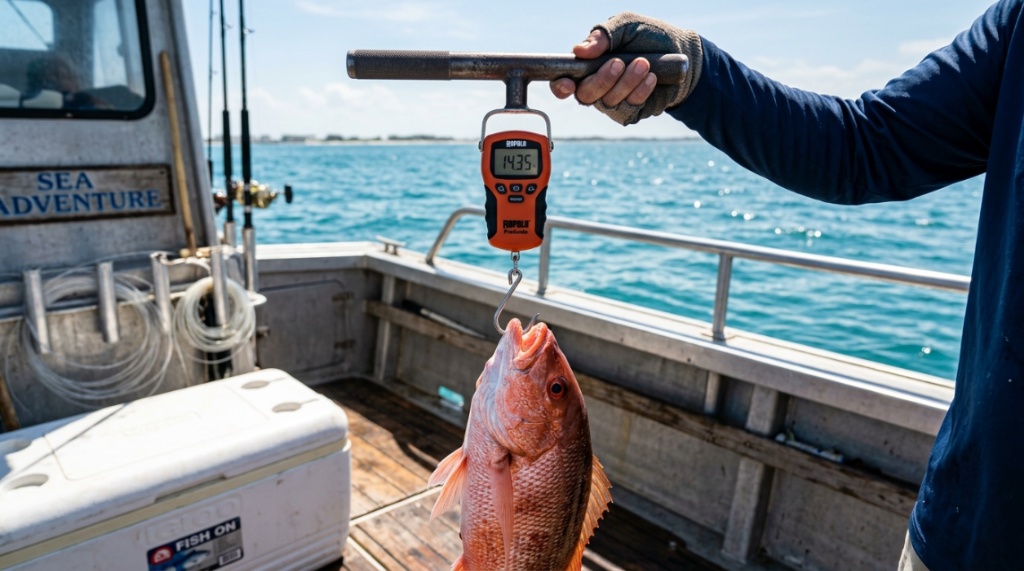
Some brands slap a waterproof sticker on a cheap plastic scale. Inside, there is no conformal coating on the circuit board. The battery contacts are bare copper. These scales die after one saltwater trip. Always check the fine print—if the manual says “splash proof,” it will fail in real saltwater conditions.
Why is a saltwater-rated scale different from a freshwater scale?
A saltwater-rated scale uses marine-grade stainless steel, sealed bearings, and corrosion-resistant internal components. Freshwater scales typically use nickel-plated steel or even zinc alloys that pit and rust. The critical difference is the quality of the load cell—the device that measures weight. Saltwater scales often feature a sealed, waterproof load cell that prevents salt crystals from jamming the mechanism.
The role of the load cell in accuracy
The load cell is a metal strain gauge that bends slightly under weight. In saltwater scales, it is coated in a waterproof resin or enclosed in a rubber boot. Without this protection, saltwater seeps in, causing inaccurate readings or total failure. Many cheap scales stop reading correctly after three months of saltwater use.
Material choices: Stainless steel vs. coated aluminum
Stainless steel (especially 304 or 316 grade) resists rust. Coated aluminum is lighter but the coating can chip, exposing bare metal. For a handheld scale, anodized aluminum with a rubberized grip is a solid choice. The hook should always be stainless steel or titanium, never zinc-plated.
Battery compartment design matters more than you think
A screw-down battery cover with a rubber O-ring is essential. Some scales use a snap-on cover that pops open when dropped. This lets in salt spray immediately. Look for a compartment that uses a coin-slot screw or a latch with a secondary lock. Also, use lithium batteries—they last longer and resist leakage better than alkalines.
Which features should I prioritize in a waterproof fish scale?
Priority number one is accuracy within ±1 ounce up to 50 pounds. Second is a bright backlit display for low-light conditions. Third is a sturdy, non-slip grip for wet hands. After that, look for a tare function for weighing fish in a net or cooler, and a memory recall for tracking your best catches.
Accuracy tolerance: What is acceptable for tournament fishing?
For casual fishing, ±1% error is fine. For tournament anglers, look for scales certified by the National Type Evaluation Program (NTEP) or equivalent. These are accurate to within 0.1% or better. Many digital scales drift over time—test yours annually with a known weight.
Backlight readability in direct sunlight
A scale with a blue or white LED backlight is nearly impossible to read on a sunny day. Look for an LCD with a high contrast ratio or an OLED screen. Some premium scales use transflective displays that reflect sunlight while remaining readable in the dark.
Tare weight and its overlooked uses
Tare weight zeroes out the weight of a net, cooler, or bag. If you want to weigh a fish without touching it (good for catch-and-release), you can put it in a wet net, tare the scale, then weigh the fish. This feature is often missing on budget scales but is incredibly useful for ethical fishing.
How do I know if a fish scale will survive a fall on a boat deck?
Check for a rubberized armor shell and a drop test rating of at least 3 feet (1 meter). Many waterproof scales are shock-resistant by design, but not all are built to survive a tumble off a cooler. A scale that breaks when dropped is useless, even if it is waterproof. Look for over-molded rubber corners and a reinforced hook mount.
The drop test: What to look for in build quality
Good scales have internal foam padding around the circuit board. The hook should be attached with a metal ring, not a plastic tab. The casing should have no sharp edges where impact forces concentrate. Brands like Boga Grip and Rapala have excellent drop-test track records.
Carrying case and storage tips for longevity
Even a waterproof scale should be rinsed with fresh water after every trip and stored in a dry, ventilated case. A neoprene pouch helps absorb condensation. Never leave a scale in direct sunlight in a car—heat degrades the gaskets and battery life.
What the warranty tells you about durability
A manufacturer that offers a 3-year or longer warranty on a waterproof scale is confident in their build. A 90-day warranty is a red flag. Read the fine print—some warranties exclude saltwater damage even if the scale is labeled as saltwater-safe.
Can I use a cheap fish scale for occasional saltwater trips?
You can, but expect it to fail after 5–10 trips. A budget scale under $20 is typically splash-proof, not submersible. The hooks rust, the buttons stick, and the display fogs up. If you fish saltwater only twice a year, a cheap scale might work, but you will eventually lose your biggest catch’s weight data.
The $15 scale trap: What you actually get
Inside a cheap scale, you will find a plastic spring, bare wires, and a single-layer PCB. The battery compartment is not sealed. The hook is steel with a chrome coating that flakes off. These scales are fine for freshwater trout, but not for redfish, snook, or tarpon in brackish water.
When a mid-range scale offers the best value
Scales in the $35–$60 range—like the Brecknell 1220 or the Hosa Handheld—offer IPX7 ratings, stainless steel hooks, and replaceable batteries. They also have better accuracy tolerances. For the average angler fishing saltwater 10–20 times a year, this is the sweet spot between cost and durability.
Why premium scales ($100+) are worth it for hardcore anglers
High-end scales like the Rapala Touchscreen or Boga Grip 315 feature titanium hooks, fully sealed electronics, and IPX8 ratings. They also include memory storage, temperature sensors, and calibration certificates. If you fish tournaments, charter, or simply hate replacing gear, the investment pays off within a season.
How to test a fish scale’s waterproof claim before buying
Look for genuine customer reviews that mention prolonged submersion—not just splashes. Watch video reviews where people submerge the scale in a bucket of water for 10 minutes. If you are buying in-store, ask if you can test the seal by pressing the buttons underwater (stores with a water test tank are rare, but they exist).
Reading between the lines of online reviews
Ignore 5-star reviews that say “works great” without details. Focus on 3-star reviews that mention specific failures: “Died after first rain” or “Hook rusted after one saltwater trip.” These tell you the real-world waterproof limits. Also, check how old the review is—a scale that lasts a year for one person might fail in six months for another.
The water test you can do at home (carefully)
Fill a sink with room-temperature fresh water. Submerge the scale for 15 seconds, then remove it and operate the buttons. If the display flickers or the buttons feel mushy, it is not properly sealed. Do not do this with a brand-new scale unless you can return it—this test voids most warranties.
What the IPX rating certification actually involves
IPX7 certification requires a 30-minute submersion at 1 meter. But some manufacturers self-certify without third-party testing. Look for the words “certified by” or “tested to IPX7 standards” rather than just “IPX7 rated.” Independent testing from bodies like TÜV Rheinland adds credibility.
Which brand makes the most reliable waterproof fish scale for saltwater?
Brands with the best track record include Rapala (for digital scales), Boga Grip (for mechanical scales), and Brecknell (for portable, high-accuracy units). Each has a specific specialty. Rapala leads in digital innovation, Boga Grip in analog reliability, and Brecknell in value-plus-accuracy. There is no single “best” brand for every angler—it depends on your budget and fishing style.
Rapala: The digital innovator
Rapala’s Touchscreen series offers IPX8 waterproofing, a color display, and Bluetooth connectivity for logging catches. The load cell is sealed in a resin block. The main drawback is the battery life—the screen drains power faster than standard LCDs. They are ideal for tech-savvy anglers who want data tracking.
Boga Grip: The analog standard for decades
Boga Grip scales are mechanical, so there is no battery to fail. They use a stainless steel spring and a dial indicator. They are essentially indestructible—you can drop them overboard, rinse them, and they still work. The trade-off is lower precision (typically ±4 oz at higher weights) compared to digital models.
Brecknell: The workhorse for professional guides
Brecknell scales (like the BMS 100) are used by many fishing guides because of their ±0.1% accuracy and IPX7 rating. They are not as flashy as Rapala, but they are built to withstand heavy use. The display is simple, the buttons are large, and the battery lasts 200 hours. This is the waterproof fish scale saltwater fishing gear that gets the job done without gimmicks.
What is the proper way to clean and maintain a saltwater fish scale?
Rinse the scale with a gentle stream of fresh water immediately after every saltwater trip. Do not use high-pressure hoses, as they can force water past the gaskets. Dry the scale with a microfiber cloth, paying special attention to the hook joint and button crevices. Store it in a ventilated area, not a sealed plastic bag.
Step-by-step post-trip cleaning routine
- Remove the battery and set it aside.
- Rinse the scale under low-pressure fresh water for 20 seconds.
- Use a soft brush (toothbrush) to scrub the hook swivel and button edges.
- Shake out excess water and pat dry with a lint-free cloth.
- Leave the battery compartment open for 2 hours to air dry completely.
- Reinstall the battery and store in a dry case.
How often to calibrate your scale for accuracy
Calibrate using a known weight (like a 5-pound dumbbell) before each major trip. After 6 months of regular use, consider professional recalibration. Saltwater use accelerates mechanical drift, especially if the load cell gets bumped. A scale that is off by 4 ounces can make a difference in a tournament.
Signs your scale has saltwater damage
Common indicators include: condensation inside the display, sticky buttons, flickering readings, a rusty hook, or a battery that dies quickly. If you see any of these, stop using the scale immediately. Some damage can be reversed by drying, but corrosion inside the load cell is often permanent. Handling heavy, thrashing fish in rough seas requires the right gear to protect both you and your catch. While finding the right waterproof fish scale for saltwater fishing ensures an accurate weight, don’t overlook your hand safety. Pairing your scale with specialized Fishing Gloves for Alaska’s Harsh Weather gives you the necessary grip and protection against sharp fins and freezing spray.
Frequently Asked Questions
Can a waterproof fish scale be repaired if it gets saltwater inside?
Sometimes, if caught early. Remove the battery immediately, rinse the interior with isopropyl alcohol (90% or higher), and let it dry for 48 hours in a warm, ventilated area. If corrosion has already formed on the circuit board, the scale is likely a total loss. Prevention through regular rinsing is far more effective than repair.
How do I know if a fish scale has a sealed load cell?
Check the product specifications for terms like “encapsulated load cell,” “potting compound,” or “sealed sensor.” Images often show a rubber boot over the internal mechanism. If the manual does not mention load cell protection, assume it is not sealed for saltwater use.
What is the difference between a digital and mechanical saltwater scale?
Digital scales offer higher precision, memory storage, and backlighting, but they rely on batteries and are more susceptible to water damage. Mechanical scales (like spring or dial gauges) are simpler, battery-free, and generally more waterproof, but they are less precise and harder to read at night.
Can I use a fish scale for weighing other heavy items besides fish?
Yes, but be mindful of the weight limit. Many saltwater scales top out at 50–100 pounds. Do not exceed the maximum capacity, as it can permanently damage the load cell. Also, avoid weighing items with sharp edges that could damage the hook or your hand.
Why does my fish scale read different weights on wet vs. dry fish?
Wet fish often weigh slightly more due to excess water on the skin. Slime and water trapped in the gills or mouth can add 1–2 ounces. For accurate weight, gently pat the fish dry with a towel before weighing, or use the tare function with a wet net to compensate.
How long should a good saltwater fish scale last?
With proper maintenance, a high-quality scale (IPX7 or higher) should last 3–5 years. Cheaper scales often fail within 1–2 seasons. The hook and battery compartment are typically the first points of failure. Annual calibration and regular rinsing significantly extend lifespan.
Is a fish scale with a fabric strap better than a hard case?
A fabric strap is more comfortable for carrying but may absorb saltwater and mold over time. A hard case with drainage holes is better for storage because it allows the scale to dry without trapping moisture. Some anglers use a magnetic carabiner for quick access, which works well as long as the scale is made of non-magnetic stainless steel.
Conclusion
Choosing the right waterproof fish scale for saltwater fishing is not about picking the most expensive option—it is about matching the scale’s build quality and features to your fishing habits. Prioritize an IPX7 rating, a sealed load cell, and corrosion-proof materials like stainless steel. Rinse your scale after every trip, store it in a ventilated case, and calibrate it regularly. A reliable scale is more than an accessory; it is your record keeper, your bragging tool, and your gateway to catch-and-release best practices. Do not let a foggy display or a rusted hook steal your victory. Equip yourself with a scale that can handle the ocean’s worst. Good luck, and tight lines.