Living in the Sunshine State comes with a peculiar interior design challenge. That brilliant Florida sun that draws you to the beaches is the same relentless force that fades your furniture, spikes your cooling bills, and turns your living room into a greenhouse by 2 p.m. You need window coverings that do more than just look pretty; you need a defense system. Choosing the right sun-blocking curtains Florida homeowners rely on isn’t just about picking the darkest fabric. It involves understanding material density, lining options, and installation methods to combat our specific subtropical glare and heat. This guide breaks down exactly what to look for, how to filter out the marketing fluff, and how to make a choice that keeps your home cooler and your interiors protected.
Key Takeaways
- Fabric weight and weave density matter more than color alone when blocking Florida’s intense UV rays and heat.
- Thermal-backed or blackout-lined curtains provide measurable insulation, reducing solar heat gain and easing the load on your AC.
- Closed-weave synthetic fabrics like polyester offer superior durability and moisture resistance compared to natural fibers in humid climates.
- Proper installation—including wider rods and a tight ceiling mount—prevents light leakage, which is critical for true blackout performance.
- Layering curtains with blinds or shades creates an air gap that significantly improves energy efficiency beyond a single layer.
Why Standard Curtains Fail Florida’s Climate Test
If you moved to Florida from a northern state, you probably brought your old drapes with you. While those might have worked in Ohio or Pennsylvania, they likely aren’t cutting it here. The issue is the angle and intensity of the sun. Florida sits much closer to the equator, meaning the sun’s rays hit your windows more directly and with higher UV concentration for longer periods of the year. A standard medium-weight curtain will block some light, but it often heats up quickly and radiates that heat back into the room. Furthermore, the high humidity here can cause natural fibers like cotton and linen to absorb moisture, leading to mildew growth in the folds of the fabric. This is why a strategic upgrade to sun blocking curtains Florida residents actually use involves rethinking the entire window treatment strategy rather than just swapping one fabric for another.
How to Evaluate Fabric Density and Weave
The quickest way to judge a curtain’s blocking ability in the store is to hold it up to a bright light. If you can see a clear silhouette of your hand through the fabric, it is not going to block the Florida sun effectively. You need a tight, dense weave. Look for materials like high-grade polyester, microfiber, or velvet. These fabrics pack more fibers per square inch, preventing light from penetrating the gaps in the thread. Avoid loose weaves like open linen blends or sheer cottons for your primary layer. While a dense fabric is essential, you also need to check the texture. A fabric with a rough, nubby texture often has a looser weave that allows light to sneak through, whereas a smooth, flat surface tends to block light more consistently.
The Role of Backing and Linings
Unless you plan to line the curtains yourself, you should look for options that have a bonded backing. There are two main types: white foam-backed and acrylic-coated. A white foam backing reflects heat back toward the window, preventing the room from heating up. Acrylic-coated backings are effective for blackout, but they can sometimes yellow or crack over time in extreme heat. For Florida, specifically, you want to ensure the backing is moisture-resistant. A fabric that absorbs water will become heavy and may start to smell musty. The best curtains for our climate feature a triple-weave construction where the blackout layer is sandwiched in the middle of the fabric, protecting it from humidity on both sides.
Weighing Thermal Insulation vs. Light Blocking
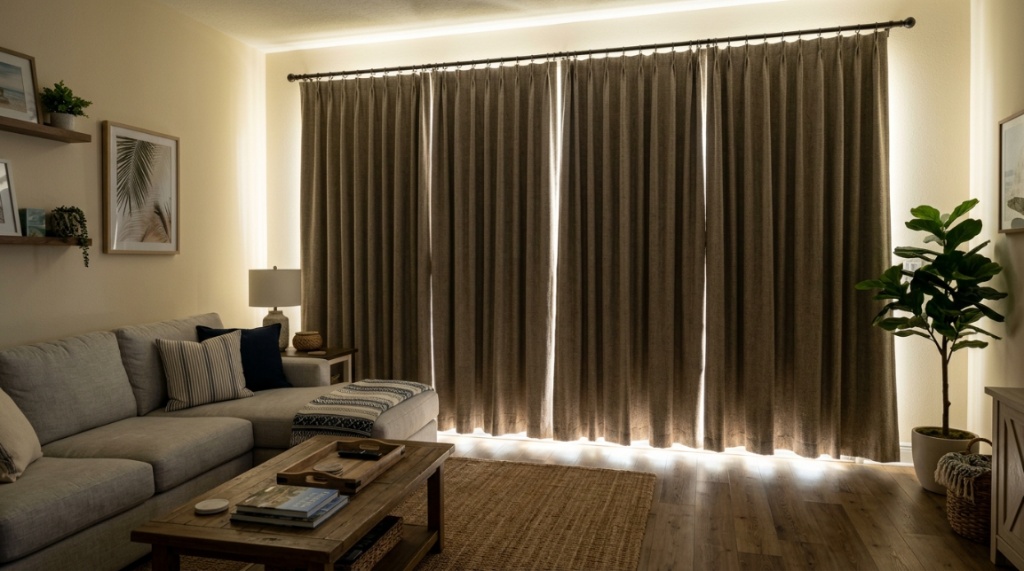
There is a common misconception that “blackout” and “thermal” are the same thing. They are related, but not identical. Blackout curtains are designed to stop 99% of light. Thermal curtains are designed to stop heat transfer. In Florida, you want both. However, you need to prioritize your immediate pain point. If your main issue is the glare on your TV during the afternoon, look for “blackout” on the label. If your issue is that your west-facing bedroom feels like an oven by 5 p.m., you need “thermal” or “insulated.” The best products combine both features—usually by adding an acrylic foam layer between the front fabric and the back liner. This foam layer acts as a buffer, slowing down the transfer of outdoor heat into your air-conditioned space.
Understanding the Air Gap
Even the best thermal curtain loses its effectiveness if it is pressed flat against the glass. Heat conducts through the window, through the curtain, and into the room. To get the full insulating benefit, you need an air gap. This is where the “high-low” or “toggle” curtain rod comes into play. By mounting the rod a few inches away from the wall, you create a pocket of still air between the window and the curtain. This air acts as an insulator. When you buy curtains, factor in the cost of a stand-off bracket or a curved rod that pushes the curtain away from the window frame. Without this gap, you are really only blocking light, not heat.
Selecting Colors and Patterns That Work
While dark colors absorb light, they also absorb heat. A dark navy curtain in a sunny window can get very hot to the touch, and while it blocks the light, it may radiate heat into the room. Lighter colors with a dark backing are often a smarter choice for Florida. A white or cream front reflects the sun’s rays, while the dark or metallic backing on the inside of the fabric blocks the light from passing through. This “reflective front, dark back” combination is a professional designer trick to keep rooms bright on the interior side while staying cool. If you are concerned about fading, choose lighter colors for the front-facing side, as they will absorb less UV radiation and maintain their hue for longer than saturated colors.
To keep your living space cool and stylish on a budget, learn how to style your seating area with tips found in our guide on how-to-save-on-couch-pillow-multi-packs.
Common Mistakes When Buying Curtains for Florida Homes
Many homeowners make errors at the purchasing stage that prevent the curtains from working effectively. Being aware of these pitfalls can save you money and frustration.
- Buying panels that are too narrow: Curtains should be 1.5 to 2 times the width of your window. This allows the fabric to gather, creating folds that block side light. Flat, stretched panels leave gaps.
- Hanging them too low: Mount the rod high—almost at the ceiling line—and let the curtains drop to the floor. This creates a thermal pocket and prevents air from escaping over the top of the rod.
- Ignoring the top gap: A standard rod lets light spill over the top of the curtain. Use a track system or a valance to cover the top header, preventing light from bouncing off the ceiling onto the wall.
- Choosing grommet tops: While stylish, grommets have a large hole that lets in light and drafts. For maximum blocking, choose pinch pleat or rod-pocket styles with a tight header.
Installation Tricks for Maximum Light Control
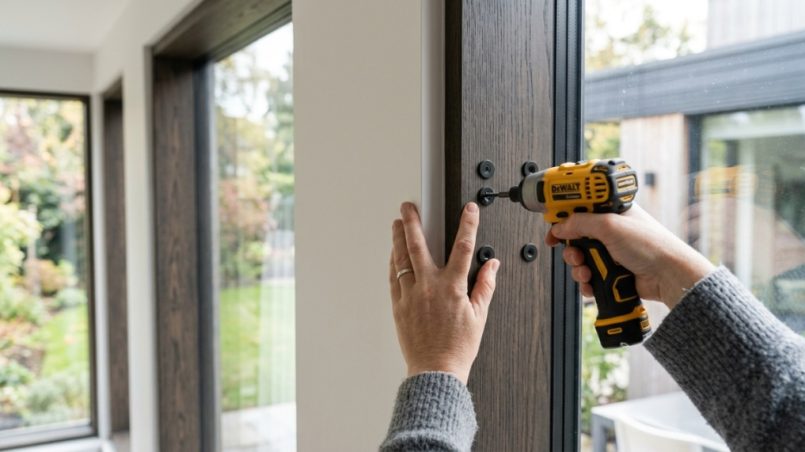
Installation is where good curtains go to die. If you have spent money on high-quality, thermal-backed panels, you need to install them correctly to see the benefits. First, extend the rod 3 to 4 inches beyond the window frame on each side. This ensures the curtain stack (the fabric bunched up when open) sits on the wall, not over the glass, allowing 100% of the window to be covered when closed. Second, use a “return” bracket or a wrap-around rod that curves back toward the wall. This seals the edge of the curtain against the wall, preventing the slivers of light that shine through the gap between the curtain and the window frame. Finally, consider a ceiling mount. Hanging from the ceiling eliminates the top gap entirely and adds a few inches of height to your room, making it look more spacious while improving light blockage.
Maintenance and Longevity in Humid Climates
Florida’s humidity can be brutal on textiles. Curtains in a humid home are prone to absorbing moisture, which can lead to musty odors and mildew. To combat this, opt for synthetic fabrics that do not absorb water. Polyester and nylon are excellent choices because they dry quickly and resist mold growth. If you prefer natural fibers, you must be diligent about airing them out. Open the curtains fully during the day if the windows are closed and the AC is running, as this allows air circulation behind the fabric. Avoid steam cleaning these curtains frequently, as the moisture can get trapped in the layers. Instead, use a vacuum attachment with a brush head to remove dust that settles in the folds, which can attract moisture and mildew spores.
Frequently Asked Questions
What is the best fabric for blackout curtains in Florida?
Polyester and microfiber are the best choices for Florida. These synthetic materials have a tight weave that blocks light effectively, and they are highly resistant to moisture and mildew, unlike natural fibers like cotton or linen which can absorb humidity and deteriorate over time.
Are blackout curtains worth it for energy savings in Florida?
Yes, they are worth it when they have a thermal backing. By blocking solar heat gain during the hottest part of the day, they reduce the workload on your air conditioner. While the savings vary, blocking direct sunlight can reduce a room’s temperature by several degrees, which translates to lower energy consumption.
Can I just use blinds instead of curtains to block the sun?
Blinds are effective at diffusing light, but they often leave gaps at the edges and between slats. For complete sun blocking, curtains are superior. However, a combination of blinds and curtains is the most effective strategy, as the blinds create an initial barrier and the curtains handle the remaining light and insulation.
What color curtain is best for blocking heat?
For blocking heat, you want a light-colored front facing the sun to reflect rays, with an opaque or blackout lining on the back. A white or cream front with a dark back is more effective at keeping a room cool than a dark colored curtain, which absorbs heat.
How often should I replace sun-blocking curtains in Florida?
With proper care, high-quality polyester curtains should last 5 to 7 years in Florida. However, you should inspect them every year for signs of UV degradation, such as fading on the backside facing the window or stiffness in the fabric, which indicates the fibers are breaking down.
Conclusion
Selecting sun-blocking curtains in Florida requires a shift in mindset. You are not just buying a decorative fabric; you are buying a piece of functional equipment designed to fight solar radiation and humidity. Focus on tight weaves, synthetic fibers, and thermal backings. Install them high, wide, and close to the wall to eliminate those sneaky light leaks. By prioritizing the technical aspects over just the aesthetic, you will create a cooler, more comfortable home that protects your furniture and your energy bill. Take the time to measure correctly and choose quality materials, and your windows will finally be a match for the Florida sun.