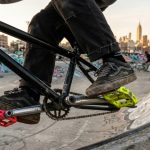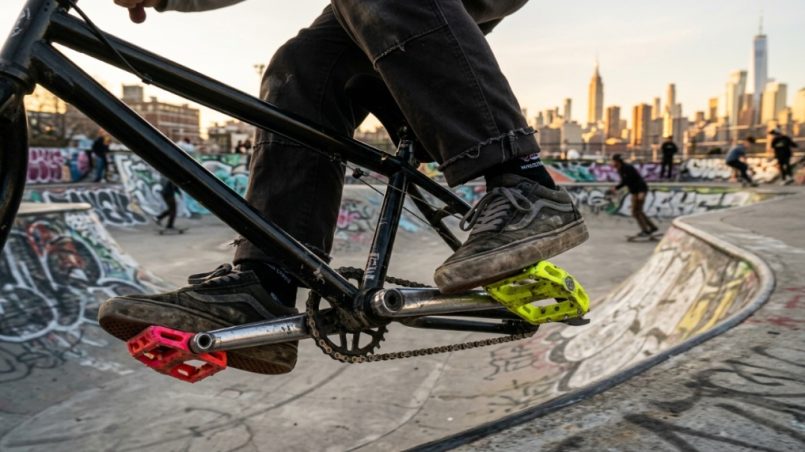
Riding the streets of New York City on a BMX bike is a different beast entirely. Between the potholes, the rain-slicked asphalt, and the constant stop-and-go of traffic, your pedals take a beating that suburban riders rarely experience. The problem is, many riders grab whatever pedals are cheapest at the local shop, only to find themselves with cracked bodies or stripped bearings within a few months. You need gear that holds up to the unique demands of city riding, which is why knowing how to pick quality BMX pedals NYC riders actually trust is so important. This guide breaks down the materials, bearing systems, and design choices that matter most when you are negotiating the five boroughs, so you can make a smart investment rather than a repeat purchase.
Key Takeaways
- Nylon composite pedals are the best all-around choice for NYC street riding because they are lightweight, grippy, and won’t destroy your shins on a failed trick.
- Sealed bearings are non-negotiable for city riding, as they keep water, sand, and winter road salt out of your pedal spindles.
- Platform size should match your shoe size and riding style, with larger platforms offering more stability for street gaps but less clearance for grinds.
- Pin height and material determine grip more than anything else, and heat-treated steel pins are the standard for serious riders.
- You do not need to spend over $100 to get a reliable set, but the $20 no-name options will almost certainly fail quickly in NYC conditions.
Why Material Choice Matters More in NYC Than Anywhere Else
The material of your pedal body dictates weight, durability, and grip. It also determines how much it hurts when you slip off and the pedal smacks your shin. In NYC, you are also dealing with temperature extremes from freezing winters to humid summer heat, so your material choice needs to handle both ends of the spectrum.
Nylon Composite Pedals
Nylon composite pedals are often considered the smartest choice for urban BMX riding. They are significantly lighter than alloy, which reduces rotational weight and makes the bike feel more responsive when you are hopping up curbs or dodging pedestrians. High-quality nylon is not brittle—it flexes slightly on impact, which helps absorb the shock of landing from tall drops.
The biggest downside is that nylon can snap clean in half if you smack it hard against a sharp ledge during a grind. That said, for most street riding, the weight savings and shin protection outweigh the durability trade-off. Look for “glass-fill” or “fiber-reinforced” nylon composites, as these hold up much better than basic plastic.
Aluminum Alloy Pedals
Alloy pedals are the premium option for durability. They are nearly indestructible in normal street use and will survive repeated scrapes against concrete and metal surfaces. The trade-off is weight—alloy pedals are noticeably heavier, and the extra mass can make the bike feel sluggish if you are trying to throw it around in the air.
Aluminium also gets extremely cold in winter. This is an overlooked issue in NYC. When it is 20°F outside and windy, alloy pedals will freeze your feet through thin sneakers within minutes. Nylon is a poor conductor of heat, so it stays much closer to a neutral temperature even in freezing conditions.
Magnesium and Plastic Options
Magnesium pedals offer the strength of alloy with a slightly lower weight, but they are less common because the manufacturing process is more expensive. On the flip side, basic resin or plastic pedals without fiber reinforcement are a waste of money for serious NYC riding. They flex too much, crack easily in cold weather, and often strip the threads where the spindle connects.
For most riders, the practical choice is a high-quality fiber-reinforced nylon pedal. If you are a heavier rider or you primarily do technical grinding, fork out the extra cash for a forged alloy set.
Spindle and Bearing Systems: The Parts You Cannot See
When you are picking quality BMX pedals NYC streets demand, the internal components matter just as much as the platform you stand on. The spindle and bearings are what take on the rotational load every time you pedal. In NYC, rain, puddle water, gravel, and winter salt all work their way into the pedal body.
Sealed Bearings vs. Loose Ball Bearings
Always choose pedals with sealed cartridge bearings. A sealed bearing has a rubber o-ring guard that prevents dirt and moisture from entering the race. Loose ball bearings, or the cheaper equivalents, rely on grease alone for protection. After a few weeks of riding through NYC puddles and construction dust, loose ball bearings turn into gritty, grinding messes.
A good pedal will have a dual-bearing setup—one outer and one inner sealed bearing on each spindle. This distributes the load evenly and prevents axial play from developing. If you spin the pedal by hand and feel any roughness or grinding immediately out of the box, put them back on the shelf,To complete your setup for urban riding, pairing your pedals with the right handlebars is essential; check out our guide on how to Choose BMX Grips That Match Your Riding Goals for maximum control.
Spindle Material and Design
The spindle is a bolt that fits into the crank arm, and if it breaks, the pedal falls off the bike entirely. Chromoly (chromium-molybdenum steel) spindles are the standard for quality pedals. They reduce weight by machining a hollow channel through the center while retaining high tensile strength. Avoid pedals with standard stainless steel spindles at the budget level; they are often thinner and more vulnerable to bending or snapping when you drop a 20-foot stair set.
Also, check the spindle length. A longer spindle pushes the pedal farther from the crank arm. This helps if you have wide feet, but it also reduces your clearance during grinds. Consider pairing the pedal with the spindle that best suits the width of your feet and your style of riding.
Size, Grip, and Platform Configuration
This is where the subjective part comes in. A pedal that works great for a 6-foot rider with size 12 shoes will feel unstable for a 5-foot rider with size 8 shoes. The platform dimensions and pin configuration are the most significant factors in how much grip you get.
Concave Profile
Concave pedals have a slightly dished shape—higher at the front and back, lower in the middle. This curvature allows your foot to lock into the pedal rather than sit flat on top of it. For street riding in NYC, where sudden acceleration and hard braking are common, concave pedals keep your feet in place without requiring you to consciously grip with your toes.
Deeper concavity makes entry more difficult and can feel awkward for quick foot placement. Shallow concavity holds your foot well but requires more downward foot pressure. For most riders, a medium concave is a good balance.
Pin Height, Pattern, and Count
There are two main types of pins: replaceable and fixed. Replaceable pins screw into the pedal body and can be swapped out when they get worn. Fixed pins are molded into the pedal and cannot be replaced if they strip or bend.
- Steel pins: Threaded into the body, provide maximum grip, and are replaceable. They can tear up the soles of your shoes if they are too long or have aggressive threading.
- Molded plastic pins: Cheaper and lighter, break off easily when you slide across concrete, and offer very little grip once they wear down.
- Pin height: Standard pins measure around 5mm to 6mm above the platform surface. At 6mm, you have very strong bite, but it hurts if the pedal catches your ankle. At 4mm, the grip is insufficient for hard street riding.
A pedal with 20 to 24 pins is generally considered the standard for street and park riding. Pins on the outer edges provide better foot-locking in the concave section.
Platform Area and Width
Pedals come in sizes generally categorized as small (around 100mm x 95mm), medium (105mm x 100mm), or large (110mm x 105mm). A larger platform gives you more surface area to land on, which feels more stable when you are landing with heavy impact. However, larger pedals are more likely to catch on rail and ledge during grinds.
For city riding, medium to large platforms are recommended for the stability they offer. If you ride strictly flatland or focus on spin tricks, smaller platforms are more forgiving and reduce the risk of your feet bouncing off accidentally.
Street vs. Park vs. Dirt: Matching Pedals to Your Local Spots
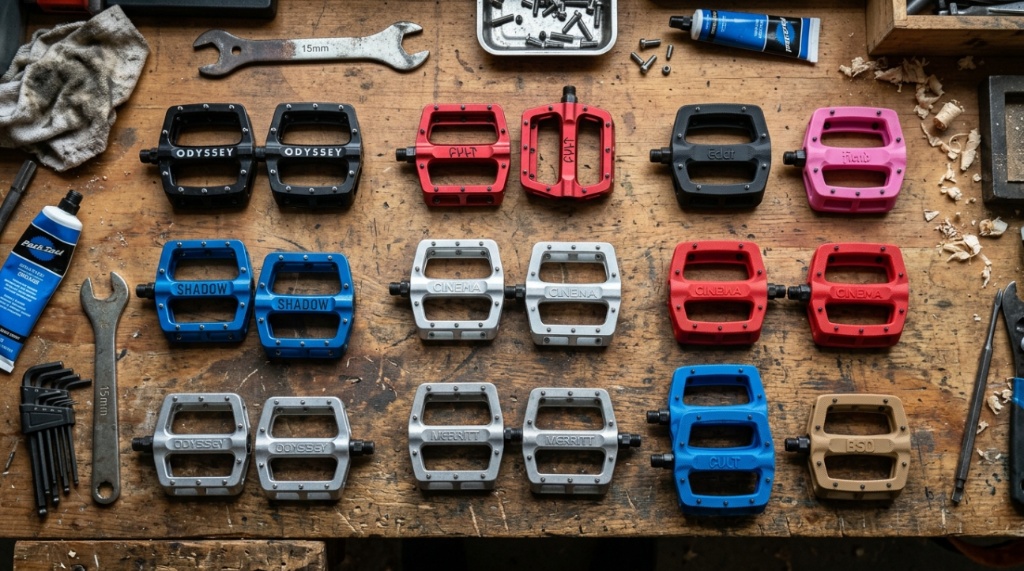
The pedals you choose should reflect what you actually do with the bike. A lot of NYC riders alternate between skateparks like the ones in Riverside Park or Death Valley and DIY street spots. These conditions require different characteristics.
For Street Riding and Gaps
Since you are constantly throwing the bike for gaps and hopping down stairs, you need the maximum grip and durability. Go for a high-pin-count pedal with a strong concave. Many serious street riders prefer alloy pedals here because they handle the abuse of hitting small ledges and rails when a grind goes wrong.
For Skatepark Sessions
Parks involve smoother, more fluid riding with less risk of hanger-up. You could easily use a good nylon pedal in the park. Weight matters more in the park than it does on the street, especially if you are riding transition bowls or pumping for speed. Nylon pedals let you keep the speed without the fatigue of carrying extra inches at the pedal level.
For Street Riding in Wet Weather
Rain wipes out almost all traction no matter what pedal set you have. In these conditions, pins are essential. You will need the tallest pins you can find to pierce through the water film between your shoe and the pedal. A grippy shoe with a stiff sole helps, but having high, aggressive pins is what will keep you attached to the pedal.
Budget Considerations and Common Pitfalls
You can spend $25 on a random pedal from a bike shop, or you can spend $150 on a premium set. So where is the line between the budget and quality options?
Pedals in the $40–$70 range (like those from well-known BMX brands) usually offer a solid aluminum body, chromoly spindle, and sealed bearings. This is the sweet spot for reliable performance. Nylon pedals from reputable brands usually fall in the $50–$80 range and provide a better weight-to-durability ratio.
Staying under $30 means you are buying pedals with sealed bearings that may be cheaply manufactured, or you are stuck with unsealed bearings and softer aluminum that strips easily. For the unforgiving streets of NYC, this is a false economy. You will just spend the money again in a few months, or worse, get stranded miles from home with a broken pedal.
Installing Your New Pedals
Once you pick the right pedals, proper installation is critical. Here is a quick step-by-step guide:
- Identify which side the pedal goes on. Pedals are marked L (left) and R (right). The left pedal has reverse (left-hand) threading.
- Apply a small amount of grease to the spindle threads before installing. This prevents seizure from galvanic corrosion and makes future removal much easier.
- Tighten the spindle into the crank arm using a 15mm wrench. Be sure to tighten in the direction of normal pedaling for the right side, and it tightens counter-clockwise for the left side.
- Crank the pedal tight enough that it does not wiggle, but do not use a breaker bar. Overtightening can strip the crank threads. A firm final pull is enough.
- When you remove them later, be patient—the pedals self-tighten with riding, so removal always requires a substantial amount of muscle use.
Frequently Asked Questions
How long do quality BMX pedals last?
With sealed bearings and a solid alloy or nylon composite body, a set of quality pedals can last multiple years of regular street riding. The main components that wear out are the replaceable pins, which can be changed as needed. The sealed bearings themselves usually last several seasons before requiring replacement.
Are nylon pedals safe for street riding?
Yes, high-grade fiber-reinforced nylon pedals are safe for street riding. They are strong enough for most impacts up to moderately large drops. They are also preferred by many riders because they do not batter shins and ankles as severely as alloy pedals when you slip off.
What size pedal is best for a beginner?
For a beginner, a medium platform size (around 105mm x 100mm) is the best starting point. It gives you enough area to find your foot without being so large that it interferes with your learning of grinds. Also, look for pedals with fewer, shorter pins to reduce the risk of tearing up your shoes as you get comfortable.
Do I need special pedals for winter riding?
There is no “winter-specific” BMX pedal, but choosing nylon over alloy helps keep your feet warmer because it does not conduct cold. Also, sealed bearings are even more important in winter to block out salt and moisture from the slush.
Can I use plastic pedals on a high-end BMX bike?
Yes, you can use plastic composite pedals on any BMX bike. Just be sure they are made from a fiber-reinforced nylon composite rather than a basic polypropylene or resin, otherwise, they will flex and feel weak under aggressive riding.
How do I know if my pedals are worn out?
Signs of worn pedals include rough spinning or grating sounds, visible cracks in the body, snapped off pins, and noticeable play where the spindle meets the body. If you feel any of these, it is time to inspect the pedal closely and likely replace it.
Conclusion
Finding quality BMX pedals that match the demands of NYC riding boils down to material durability, reliable bearings, and a platform geometry that fits your feet and riding style. Prioritize sealed bearings and a chromoly spindle above almost everything else, since these determine whether your pedals will keep spinning smoothly through a full year of city abuse. Choose a fiber-reinforced nylon body for weight and comfort or a forged alloy body for maximum impact resistance, depending on your riding focus. Whatever you choose, avoid the bargain-bin options and stick to established brands that ride and test their gear. A quality set of pedals is one of the most affordable upgrades you can make for the ride feel and reliability of your bike. Take the time to get it right once, and your feet will thank you every time you roll out your door.