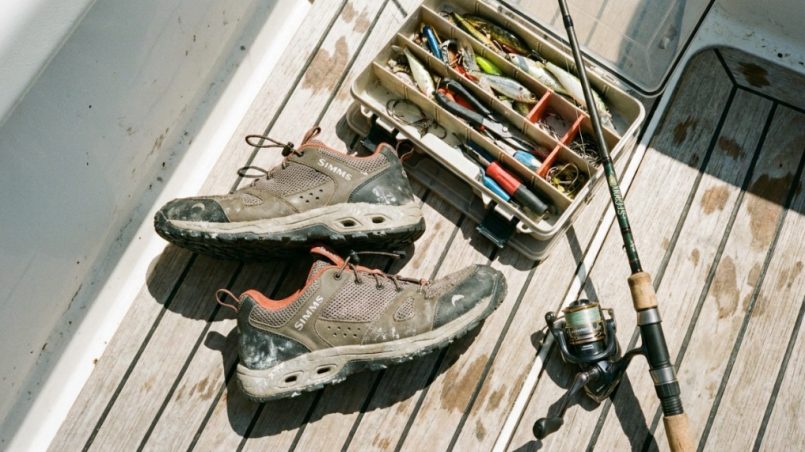
A single slip on a wet boat deck can end a fishing trip in the emergency room, and the wrong shoes cause more fishing injuries than faulty tackle or rough weather combined. Choosing the best fishing shoes for saltwater and freshwater trips means understanding that these two environments attack footwear differently and demand distinct performance features. Fishing shoes are purpose-built footwear designed with non-slip outsoles, water-resistant or quick-dry materials, and protective construction specifically engineered for wet, slippery conditions encountered while angling.
The core problem? Most anglers grab whatever old sneakers or sandals are available, not realizing that generic footwear becomes dangerously slippery when wet and degrades rapidly from salt, sand, and constant moisture exposure. The result is preventable falls, ruined shoes every few months, and uncomfortable feet that cut trips short. This guide breaks down exactly how to select saltwater fishing shoes and freshwater options based on your specific fishing style, environment, and conditions—so your footwear performs as hard as you fish.
What’s the Difference Between Saltwater and Freshwater Fishing Shoe Requirements?
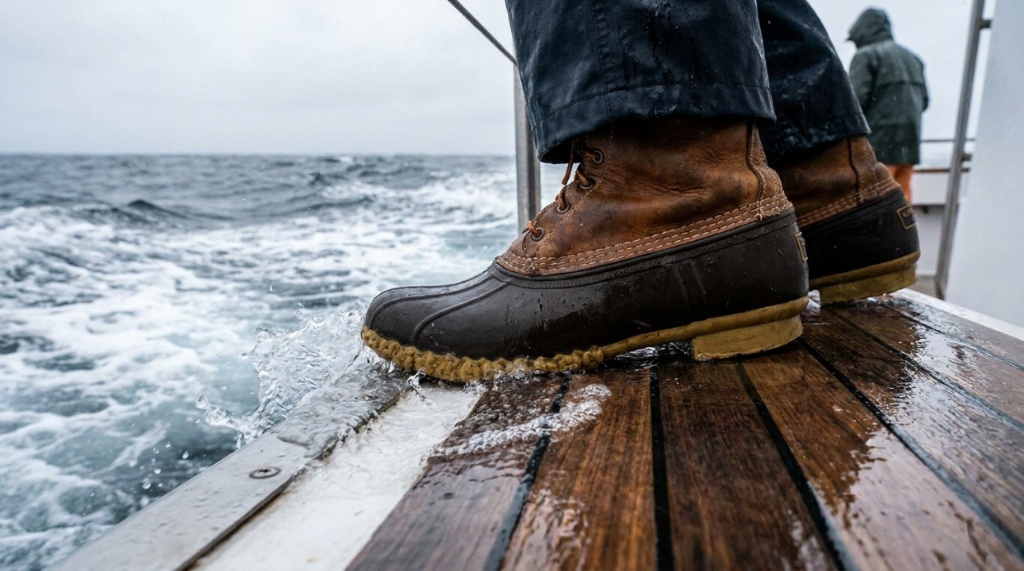
Saltwater fishing shoes must resist corrosion, provide aggressive non-slip grip on fiberglass boat decks, and drain rapidly, while freshwater shoes prioritize ankle support on uneven banks, moderate waterproofing, and traction on mud and rocks.
The environmental demands differ fundamentally:
| Factor | Saltwater Requirement | Freshwater Requirement |
|---|---|---|
| Water exposure | Constant spray, submersion, deck flooding | Occasional wading, bank moisture, rain |
| Surface type | Fiberglass deck, wet metal, dock surfaces | Rock, mud, grass, gravel, wooden docks |
| Corrosion risk | Extreme—salt destroys metal and adhesives | Low—freshwater has minimal corrosive impact |
| Traction needs | Non-marking rubber on smooth wet surfaces | Aggressive lugged sole on varied terrain |
| Drainage | Critical—standing water on decks is constant | Moderate—waterproofing often preferred over drainage |
| Protection level | Toe protection from tackle, hooks, equipment | Ankle support on uneven terrain, toe protection on rocks |
| Drying speed | Must dry fast between trips (prevents mildew) | Moderate importance — less total saturation |
A shoe that excels in saltwater often underperforms in freshwater and vice versa. The flat, non-marking rubber sole perfect for fiberglass decks provides zero traction on muddy riverbanks. The aggressive lugged hiking sole that grips forest trails will scratch boat decks and trap debris. Understanding your primary environment determines which features to prioritize.
What Outsole Features Matter Most for Fishing Shoes?
The outsole is the most critical fishing shoe component—non-slip rubber with siping (thin cuts creating suction channels) provides the best grip on wet surfaces, while the tread pattern must match your specific fishing surface.
Outsole technology breakdown:
- Siped rubber (razor-cut channels): Thin slits in the rubber sole create vacuum channels that displace water film on smooth surfaces. Essential for wet boat decks. The more siping, the more grip on smooth wet fiberglass. Brands like Shimano and Grundéns prioritize this technology.
- Non-marking rubber: Required for boat fishing. Dark or hard rubber compounds leave scuff marks on fiberglass decks, creating expensive damage. Always verify the “non-marking” designation for any boat-use shoe.
- Drainage ports: Small holes in the midsole or outsole allow water to escape rather than pooling inside the shoe. Critical for saltwater applications where deck flooding is routine. Look for 4–8 drainage ports minimum.
- Lugged tread: Deep rubber protrusions that grip soft terrain (mud, sand, wet grass). Essential for bank fishing and wading. Not appropriate for smooth boat decks where lugs create instability on flat surfaces.
- Vibram or equivalent branded rubber: Premium rubber compounds maintain grip characteristics across temperature ranges. Budget rubber hardens in cold water and loses traction. Branded outsoles justify their premium in safety performance.
For anglers who fish in both environments: consider owning two pairs—a flat-soled siped shoe for boat days and a lugged shoe for bank/wade days. Forcing one shoe to serve both creates dangerous compromises in at least one environment.
How Do You Choose Between Waterproof and Quick-Dry Fishing Shoes?
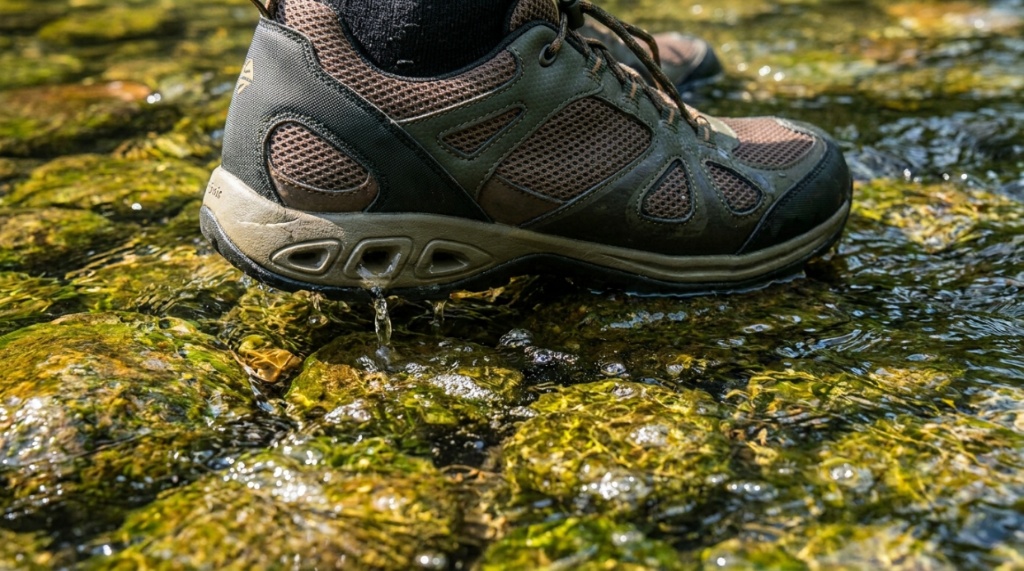
Choose waterproof shoes for cold-water freshwater fishing, where keeping feet dry prevents hypothermia—choose quick-dry drainage shoes for warm saltwater applications, where feet will inevitably get wet and fast evaporation maintains comfort.
This decision depends on water temperature and exposure type:
- Waterproof (sealed membrane): Best for cold freshwater (under 65°F), rain-prone environments, and shore fishing where you want dry feet throughout the day. Downside: If water enters over the top (wading deeper than boot height), waterproof shoes trap water inside—becoming heavy and uncomfortable with no drainage escape.
- Quick-dry (mesh/drainage): Best for warm saltwater, tropical freshwater, and any scenario where submersion is guaranteed or likely. Shoes drain rapidly and dry within 30–60 minutes of exposure. Downside: zero protection from initial wetness — your feet will get wet immediately upon water contact.
- Water-resistant (coated but not sealed): Middle ground. Repels splash and light rain but won’t survive submersion. Works for casual freshwater bank fishing where puddles and spray are the primary moisture sources rather than full wading.
Florida-specific guidance: for Florida’s warm waters (70–85°F year-round), quick-dry drainage shoes outperform waterproof ones in nearly all scenarios. Your feet will get wet regardless—fighting this reality with waterproof membranes creates hot, sweaty conditions that breed blisters and fungal issues. Embrace quick-dry and let Florida’s heat work as your shoe-dryer.
What Materials Last Longest in Fishing Environments?
Synthetic mesh and rubber construction last longest in saltwater because these materials resist salt corrosion entirely—while full-grain leather with sealed stitching performs best for freshwater durability where corrosion isn’t a factor.
Material durability by environment:
- Synthetic mesh (nylon/polyester): Corrosion-proof, fast-drying, lightweight. Ideal for saltwater. It won’t rot and is mildew-resistant when dried properly. Lifespan: 1–3 years of heavy saltwater use.
- Rubber (full rubber boot/shoe): Completely waterproof, salt-resistant, easily rinsed clean. Excellent for commercial and frequent saltwater use. Can cause foot sweat in hot conditions. Lifespan: 2–4 years.
- Neoprene: Insulating, waterproof, flexible. Best for cold-water wading and winter fishing. Degrades under UV exposure if not rinsed and stored properly. Lifespan: 2–3 seasons with care.
- Full-grain leather: Durable, supportive, water-resistant when treated. Excellent for freshwater bank fishing and wading boots. Salt destroys leather rapidly—never use it for saltwater. Lifespan: 3–7 years in freshwater with conditioning.
- EVA foam (midsole material): Lightweight cushioning that resists water absorption. Look for EVA midsoles over traditional foam in fishing shoes—traditional foam absorbs water, adds weight, and breeds bacteria.
Critical maintenance regardless of material: rinse shoes with fresh water after every saltwater trip. Salt crystals that dry in seams, stitching, and sole channels act as abrasives that accelerate material breakdown. This single habit doubles or triples saltwater shoe lifespan.
How Much Should You Spend on Quality Fishing Shoes?
Quality fishing shoes that deliver reliable grip, durability, and comfort for regular anglers cost $60–$150 from established fishing brands — with premium technical options reaching $200+ for guides and tournament anglers who fish 100+ days annually.
Budget tier breakdown:
- Under $40: Generic water shoes or repurposed athletic shoes. Minimal fishing-specific features. Outsoles lack proper siping for boat grip. Acceptable only for very occasional freshwater bank fishing. Not safe for boat use.
- $40–$80: Entry-level fishing-specific shoes from brands like XTRATUF, Huk, and Columbia PFG. Basic non-slip outsoles, drainage features, and synthetic materials. Adequate for recreational anglers fishing 1–4 times monthly.
- $80–$150: Mid-range from Simms, Grundéns, Shimano, and Korkers. Quality non-marking outsoles with advanced siping, genuine drainage systems, reinforced construction, and comfort features for all-day wear. Best value for regular anglers.
- $150–$250+: Premium technical fishing shoes and boots. Interchangeable sole systems (Korkers), BOA lacing, premium rubber compounds, and professional-grade durability. Justified for guides, tournament competitors, and anglers fishing 100+ days per year.
Cost-per-trip perspective: a $120 fishing shoe lasting 2 years across 50 trips costs $2.40 per trip. A $40 shoe lasting 6 months across 12 trips costs $3.33 per trip—with inferior safety performance every single time. Quality fishing footwear is cheaper per-use and dramatically safer than budget alternatives.
What Fishing Shoe Style Should You Choose for Your Fishing Type?
Your fishing type determines the ideal shoe style — deck shoes for inshore boat fishing, ankle boots for offshore and wading, sandals for warm-water surf fishing, and knee-high boots for cold-water wade fishing.
Style recommendations by fishing activity:
- Inshore boat fishing (flats, bay, nearshore): Low-profile deck shoes with flat, non-marking soles, maximum siping, and drainage. You need freedom of movement, quick-dry performance, and non-aggressive soles that won’t damage boat surfaces. Top picks: Grundéns Sea Knit Boat Shoes, Shimano Evair Marine Shoes.
- Offshore/deep-sea fishing: Ankle-height boots with non-slip soles, toe protection, and secure fit. Heavier seas mean more water on deck and more risk of dropped equipment. Rubber boots or high-cut deck boots protect from hooks and tackle. Top picks: XTRATUF Ankle Deck Boot, Grundéns Deck-Boss Ankle.
- Freshwater bank fishing: Trail-style shoes with lugged outsoles, water resistance, and ankle support for uneven terrain. You’re walking varied ground—muddy banks, rocky shores, and grassy slopes. Top picks: Simms Challenger Air Vent, Columbia PFG Bahama Vent.
- Wade fishing (freshwater rivers/streams): Dedicated wading boots with felt or rubber-studded soles for grip on algae-covered rocks. Ankle support is critical — river currents push against your footing constantly. Top picks: Simms Tributary Boot, Korkers Greenback.
- Surf fishing: Quick-dry sandals or water shoes for warm conditions, neoprene boots for cold. You’ll stand in surf—waterproof is futile. Prioritize drainage, sand-shedding design, and secure foot attachment that waves can’t pull off. Top picks: XTRATUF Ankle Deck Boot (cold) and Astral Loyak (warm).
How Do You Ensure Proper Fit for All-Day Fishing Comfort?
Ensure all-day comfort by buying fishing shoes a half-size larger than dress shoes (accounting for foot swelling during activity), testing with the socks you’ll actually fish in, and verifying heel lock that prevents sliding during deck movement.
Fit considerations specific to fishing:
- Swelling allowance: Feet swell 5–8% during all-day standing and activity. Shoes that fit perfectly at 8 AM feel restrictive by 2 PM. Buy a half size up from your typical size, or try shoes on in the afternoon when feet are naturally larger.
- Sock compatibility: If you fish in neoprene socks (cold water) or moisture-wicking athletic socks, bring those socks when fitting shoes. Thickness differences can change effective fit by a full size.
- Heel security: Fishing involves sudden movements—setting hooks, fighting fish, and reacting to boat movement. A loose heel allows dangerous sliding that causes ankle rolls. The heel cup should grip firmly without creating pressure points.
- Toe box space: Adequate toe room prevents blackened toenails from repeated micro-impacts (common when standing on boat decks in rough water). You should wiggle toes freely without the front of the shoe restricting movement.
- Arch support: Standing on flat boat decks for 6–12 hours without arch support causes plantar fasciitis—a painful condition that sidelines anglers for weeks. If the shoe lacks built-in arch support, add quality aftermarket insoles before your first trip.
Pro tip: break in new fishing shoes with two short sessions (2–3 hours each) before committing to a full-day trip. This identifies hotspots and fit issues before they become blisters 20 miles offshore with no option to change shoes.
When selecting the right footwear, you also need to consider your watercraft setup. If you are casting from a sit-on-top model, your footwear needs to balance wet traction with tight-space mobility. Pairing the right deck boots with the best kayak fishing accessories ensures you stay stable, organized, and comfortable during long hours of paddling and active tracking on open water.
Conclusion
Choosing the best fishing shoes for saltwater and freshwater trips requires matching your footwear to your specific environment, fishing style, and conditions. Saltwater demands corrosion-resistant materials, aggressive siping for smooth-deck grip, and rapid drainage. Freshwater demands terrain-appropriate tread, moderate waterproofing or quick-dry construction, and ankle support for uneven ground. Neither generic sneakers nor one-size-fits-all “water shoes” deliver the safety and performance that purpose-built fishing footwear provides.
Invest in quality ($80–$150 range minimum for regular anglers), maintain your shoes with post-trip freshwater rinsing, and match your shoe style to your dominant fishing type. Your feet carry you through every trip—protect them with the same intentionality you bring to selecting rods, reels, and tackle. The right fishing shoes don’t just prevent injuries. They extend your comfort, lengthen your fishing days, and let you focus entirely on what you’re there for—catching fish.
Frequently Asked Questions
Can I use regular sneakers for fishing?
Regular sneakers lack the non-slip outsoles, drainage systems, and corrosion-resistant materials that fishing demands. On wet boat decks, standard athletic shoe outsoles become dangerously slippery—offering almost zero grip on fiberglass surfaces with water film. For occasional casual bank fishing in dry conditions, sneakers work acceptably. For any boat fishing or wet conditions, purpose-built fishing shoes are a safety necessity.
How often should I replace fishing shoes?
Replace fishing shoes when outsole siping is worn smooth (visible reduction in channel depth), when drainage ports become clogged permanently, when sole delamination begins (sole separating from upper), or when traction noticeably decreases on wet surfaces. For regular anglers (2–4 trips/month), this typically occurs every 12–24 months depending on shoe quality and maintenance habits.
Are expensive fishing shoes worth the price?
For anglers fishing regularly (weekly or more), yes — premium shoes ($100–$200) deliver superior grip compounds, longer-lasting construction, better comfort features, and genuine safety improvements that justify the cost over their extended lifespan. For occasional anglers (monthly or less), mid-range options ($60–$100) deliver adequate performance without over-investing in gear that sees limited use.
What color fishing shoes should I choose?
Light colors (tan, grey, and white) stay cooler in direct sunlight—critical for Florida and tropical fishing. Dark colors absorb heat and can reach uncomfortable temperatures on sun-exposed boat decks. For boat fishing, light-colored non-marking soles are preferred. For bank fishing where mud is common, darker colors hide staining better and maintain appearance longer.
Do I need different shoes for kayak fishing?
Yes—kayak fishing benefits from neoprene booties or ultra-light drainage shoes rather than traditional deck shoes. You need flexibility for pedal operation, low profile to fit in cockpit spaces, and quick drainage for water that enters the kayak. Heavy boots or rigid deck shoes restrict movement in the confined kayak space and create discomfort during long paddling sessions.
How do I prevent fishing shoes from smelling?
Rinse shoes with fresh water immediately after each trip, remove insoles to dry separately, stuff with newspaper overnight to absorb residual moisture, and store in a ventilated space (never sealed bags or car trunks). For persistent odor, spray with antimicrobial treatment or sprinkle baking soda inside overnight. The primary cause of fishing shoe odor is bacteria growing in trapped moisture—eliminating moisture eliminates smell.