You’ve probably seen the yellow liner inside newer helmets. Every shop employee mentions it. Every review highlights it. Every premium helmet features it. But when you’re standing in the bike shop holding two helmets—one with MIPS for $180 and one without for $120—the real question hits: does that yellow liner actually protect your brain better, or is it just a marketing premium disguised as safety?
It’s a fair question. Helmet technology claims have historically ranged from genuinely life-saving to borderline snake oil. And at a $40-80 premium per helmet, MIPS adds up over years of riding and replacement cycles. You deserve to know exactly what you’re paying for — not vague promises about “rotational forces” but specific, measurable protection data.
Here’s the direct answer: MIPS helmet technology provides meaningful, independently verified additional protection against rotational brain injuries — the type of injury most likely to cause concussions and long-term brain damage in mountain biking crashes. This guide breaks down exactly how it works, how much additional protection it provides in measurable terms, and whether the premium is justified for your riding style.
What Is MIPS and How Does It Work Inside a Helmet?
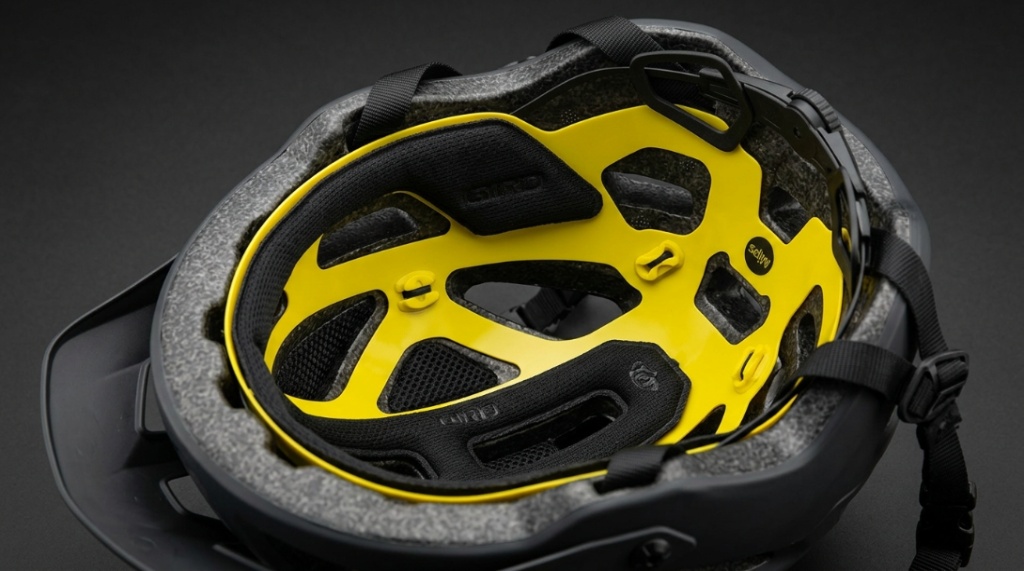
MIPS stands for Multi-directional Impact Protection System. It’s a thin, low-friction liner that sits between the helmet’s EPS foam and your head. The concept is simple but the engineering is sophisticated:
The problem it solves: Traditional helmets are excellent at absorbing direct (linear) impacts — straight-on forces that compress the foam and slow deceleration. But real-world crashes rarely produce perfectly linear impacts. When your head hits the ground at an angle (which happens in 85%+ of bike crashes), the impact creates rotational forces that twist the brain inside the skull. This rotational acceleration is what causes most concussions and diffuse axonal injuries.
How MIPS addresses it: The low-friction liner allows the helmet shell to slide 10-15mm relative to your head during an angled impact. This sliding motion redirects rotational energy away from the brain — the helmet rotates on impact while your head moves slightly less. Think of it like a built-in slip layer that mimics the brain’s own protective fluid (cerebrospinal fluid) sliding mechanism.
What it physically looks like: A thin yellow (or sometimes clear) plastic sheet with low-friction attachment points. It adds approximately 20-30 grams to helmet weight and 2-3mm to interior space. You can feel it shift slightly when you press on the helmet — that movement is the protection mechanism.
How Much Additional Protection Does MIPS Actually Provide?
This is where marketing claims meet measured data. Here’s what independent testing reveals:
Virginia Tech Helmet Ratings (independent university testing): In standardized oblique impact tests, MIPS-equipped helmets consistently score 10-20% better in rotational acceleration reduction compared to identical helmets without MIPS. This translates to measurably lower predicted concussion risk in controlled laboratory conditions.
MIPS’ own testing data (verified by third parties): The MIPS system reduces rotational motion transferred to the brain by an average of 10-15% across various impact angles and speeds. Some impact scenarios show reductions up to 40% — particularly low-speed angled impacts common in mountain biking (speed range 12-25 km/h).
Real-world interpretation: A 10-15% average reduction in rotational force is the difference between a concussion and a bell-ringing close call in many moderate-severity crashes. It doesn’t make you invincible — severe impacts still cause injury regardless of helmet technology. But it meaningfully raises the threshold at which brain injury occurs.
What MIPS does NOT do: It doesn’t significantly improve linear impact absorption (that’s the EPS foam’s job). It doesn’t protect against neck injuries. It doesn’t prevent all concussions. And it doesn’t replace the basic requirement of a properly fitted, certified helmet. MIPS enhances protection — it doesn’t reinvent it.
Is a Mountain Bike Helmet with MIPS Worth the Extra Cost?
Let’s evaluate the cost-benefit honestly across different riding scenarios:
| Riding Style | Crash Likelihood (Annual) | Typical Impact Type | MIPS Benefit Level | Worth the Premium? |
|---|---|---|---|---|
| Cross-country / Trail | Moderate (1-3 crashes/year) | Low-speed angled falls | High (ideal scenario for MIPS) | Strongly recommended |
| Enduro / All-Mountain | High (3-8 crashes/year) | Mixed speed angled impacts | High | Strongly recommended |
| Downhill / Bike Park | High (5-10+ crashes/year) | High-speed multi-directional | Moderate-High | Recommended (full-face + MIPS) |
| Casual / Gravel | Low (0-1 crashes/year) | Low-speed slides | Moderate | Recommended if budget allows |
| Commuting | Low-Moderate | Vehicle/obstacle impacts | Moderate | Worthwhile for urban risks |
The cost math: MIPS adds $30-80 to a helmet’s price. A single ER visit for concussion evaluation costs $1,000-5,000+. A single day of missed work costs $100-500+. The ongoing effects of a concussion (headaches, cognitive issues, missed riding time) are incalculable. The $40-60 average MIPS premium is one of the highest-ROI safety investments in cycling.
How Does MIPS Compare to Other Rotational Protection Technologies?
MIPS isn’t the only rotational protection system available. Here’s how the landscape looks in 2026:
MIPS (Multi-directional Impact Protection System)
Low-friction liner between shell and head. 10-15mm slip distance. Adds minimal weight. Most widely available — licensed across 120+ helmet brands. Well-established testing data spanning 15+ years. The industry standard.
SPIN (Shearing Pads INside) — POC Proprietary
Silicone-based pads attached to the interior that shear (deform) on impact rather than a full liner slip. Similar concept to MIPS but integrated into pad structure. Limited to POC helmets only. Comparable protection data in POC’s testing.
WaveCel (Bontrager/Trek)
A collapsible cellular structure that replaces traditional EPS foam in portions of the helmet. Provides both linear and rotational protection through cell deformation. Bontrager claims up to 48x better protection than standard foam in certain test configurations — though independent comparative data is more modest.
Koroyd
Engineered tubes that crush on impact, absorbing energy progressively. Primarily addresses linear impacts with some rotational benefit from its crumple behavior. Often combined with MIPS for comprehensive protection. Lighter than equivalent EPS.
6D ODS (Omni-Directional Suspension)
Dual-liner system with elastomeric dampers between inner and outer EPS shells. Provides omnidirectional energy management — both linear and rotational — across a wider range of impact speeds. Premium technology found in high-end full-face helmets.
Bottom line: All of these provide meaningful rotational protection above standard EPS-only helmets. MIPS remains the most accessible (available across all brands and price points), most independently tested, and most proven in the field. Other systems offer comparable or sometimes superior protection but with less universal availability.
If you are looking to conquer challenging terrain safely, upgrading your safety gear is only half the equation. While advanced helmet technology secures your head on technical descents, your bike’s drivetrain handles the actual performance on those steep climbs. Understanding how a 21-speed mountain bike improves your riding experience allows you to seamlessly pair mechanical efficiency with top-tier safety, ensuring you maintain complete control and momentum on any trail.
Does MIPS Affect Helmet Comfort or Fit?
Practical concerns that affect daily riding experience:
Weight: MIPS adds 20-30 grams. On a 300g helmet, that’s a 7-10% increase — undetectable while riding. You will never notice the weight difference on trail.
Fit: The liner adds a 2-3 mm interior space requirement. Well-designed MIPS helmets account for this in their sizing. However, if you’re between sizes, MIPS can occasionally make the smaller size too tight. Always try before buying or buy from retailers with free returns.
Ventilation: Early MIPS designs slightly impeded airflow because the solid liner blocked some vent paths. Current MIPS Evolve and MIPS Air designs use mesh-construction liners that maintain 95%+ of original ventilation. This is no longer a meaningful concern with modern implementations.
Hot-spot potential: The plastic liner contact points can occasionally create warm spots in extremely hot conditions. Modern attachment systems (floating points rather than full-contact) have largely eliminated this. Premium MIPS implementations are indistinguishable from non-MIPS in terms of comfort.
The slight movement feel: Some riders notice the helmet can shift very slightly on their head (the designed slip movement). This is barely perceptible during riding but occasionally noticeable when adjusting the helmet by hand. It’s working as intended — not a fit issue.
Which Mountain Bike Helmets with MIPS Offer the Best Protection-to-Value Ratio?
Top picks across budget levels:
Budget ($80-120): Giro Fixture MIPS II
Genuine MIPS protection at the lowest price point in mountain biking. Good ventilation, adjustable fit system, and a trail-friendly visor. You sacrifice some weight savings and premium materials compared to expensive options, but protection is identical in principle. Best for: riders who want MIPS without premium pricing.
Mid-Range ($130-180): Bell Sixer MIPS
Excellent ventilation, integrated camera mount, and removable visor. The construction quality steps up noticeably from budget options — lighter, better pad materials, and a more refined fit system. MIPS Spherical (two-shell system) in some configurations offers enhanced rotational protection. Best for: regular trail riders who value comfort and features.
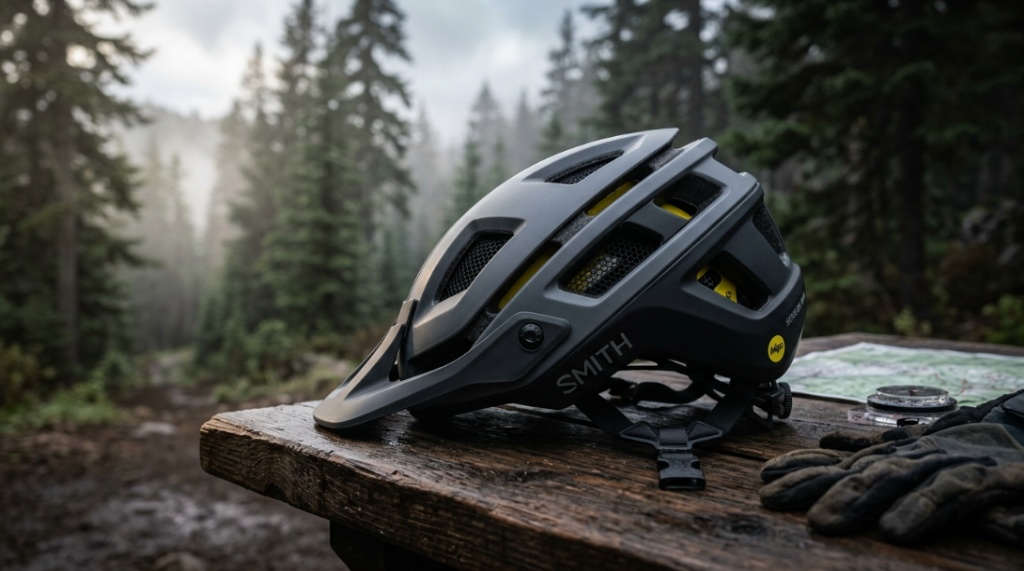
Premium ($200-280): Troy Lee Designs A3 MIPS
Deep coverage, exceptional ventilation (18 vents), and premium comfort materials. MIPS Evolve liner maintains full airflow. Built for aggressive trail and enduro riding where extended rear coverage provides additional fall protection. Best for: enduro/all-mountain riders who demand maximum coverage and comfort.
Full-Face ($250-400): Fox Proframe RS MIPS
Full-face protection with open-face ventilation and weight. MIPS integrated into a lightweight full-face design for enduro racing and aggressive descending. Removable chinbar versions offer versatility. Best for: riders wanting full-face protection without downhill-weight penalties.
If you’re comparing options specifically for mountain riding in challenging conditions, this comprehensive guide on the best mountain bike helmet choices covers additional models with detailed protection analysis for trail riding scenarios.
What Do Independent Safety Ratings Say About MIPS Helmets?
Third-party testing provides objective verification beyond manufacturer claims:
Virginia Tech Helmet Lab: The most rigorous independent bicycle helmet rating system. Tests helmets with linear and rotational impact protocols using real-world crash reconstruction. MIPS helmets consistently score in the top tiers (4-5 stars out of 5). Notably, some MIPS helmets score lower than others — the MIPS liner improves any design but doesn’t guarantee top ratings. Overall helmet design still matters significantly.
FIM (International Motorcycling Federation): Has evaluated MIPS for motorcycle applications and found measurable rotational protection benefits across multiple impact configurations.
Swedish Insurance Research (Folksam): Independent Swedish testing found MIPS helmets reduced head rotation by an average of 43% compared to equivalent non-MIPS helmets in their specific test protocol — the highest reduction figure published by any independent tester.
Important caveat: Not all MIPS helmets test equally. The MIPS liner enhances any helmet, but a poorly designed helmet with MIPS can still score lower than a well-designed helmet without it. MIPS is an improvement layer — the base helmet design (shell shape, EPS density, coverage area) remains the foundation of protection.
When Does MIPS NOT Help?
Honest limitations that marketing doesn’t emphasize:
- Perfectly linear impacts (straight down): MIPS addresses rotational forces. A perfectly perpendicular impact (head hitting flat ground straight on) doesn’t generate significant rotation. In this scenario, MIPS provides minimal additional benefit over standard EPS — though such impacts are rare in real-world mountain biking.
- Extreme high-speed impacts: At very high impact energies (severe downhill crashes, vehicle collisions), both the EPS and MIPS system may be overwhelmed regardless. No helmet technology prevents all injuries in catastrophic crashes.
- Poor fit scenarios: If the helmet doesn’t fit properly (too loose, tilted, unbuckled), the MIPS liner can’t function as designed. A perfectly fitted non-MIPS helmet outperforms a poorly fitted MIPS helmet every time.
- Non-head injuries: MIPS provides zero benefit for neck, spine, collarbone, or facial injuries. It exclusively addresses brain protection from rotational forces.
- Already-damaged helmets: If EPS foam is already compressed from a previous impact, the MIPS system has less effective foam to work with. Replace helmets after any significant impact — MIPS doesn’t make crashed helmets safe for reuse.
FAQ
Does MIPS make a helmet concussion-proof?
No. No helmet technology prevents all concussions. MIPS reduces the rotational forces that cause most concussions by 10-15% on average — raising the threshold at which concussion occurs. In moderate-severity impacts (the most common in mountain biking), this reduction can be the difference between concussion and no concussion. In severe impacts, concussion may still occur despite MIPS protection.
Is MIPS worth it for casual trail riders who rarely crash?
Yes — because the consequences of the one crash you do have matter more than frequency. A concussion from a single unexpected crash has weeks-to-months recovery time. The $40-60 MIPS premium on a helmet you’ll wear for 2-3 years costs less than a single lost day of work or riding from a preventable brain injury.
Can I add MIPS to my existing helmet?
No. MIPS must be integrated during manufacturing — the liner requires specific attachment points, shell geometry, and clearance designed into the helmet from inception. Aftermarket MIPS installation isn’t possible or safe. You need to purchase a new helmet with MIPS built in.
Do all MIPS helmets offer the same level of protection?
The MIPS liner itself provides consistent slip performance. However, overall helmet protection varies based on shell design, EPS density, coverage area, and construction quality. A well-designed premium MIPS helmet outperforms a poorly designed budget MIPS helmet. MIPS enhances any design but doesn’t equalize them.
How long does the MIPS liner last inside a helmet?
The MIPS liner itself doesn’t degrade over time under normal use — the low-friction plastic maintains its properties for 10+ years. However, the helmet’s EPS foam degrades from UV, sweat, and time (3-5 year replacement recommendation regardless of impacts). When you replace the helmet for age, you get a fresh MIPS system automatically.
Does MIPS work in full-face helmets for downhill riding?
Yes — and arguably provides even more benefit for full-face applications. Downhill crashes involve higher speeds and more extreme impact angles. MIPS in full-face helmets (Fox Proframe, TLD Stage, Bell Super) addresses the significant rotational forces generated in these high-energy angled impacts. Most premium full-face mountain bike helmets now include MIPS.
Is there any reason NOT to buy a MIPS helmet?
Very few legitimate reasons: extremely tight budget where any helmet is better than no helmet (a $40 non-MIPS helmet still provides essential protection), or a specific non-MIPS helmet that fits your head shape significantly better than available MIPS options (fit is more important than any technology). Otherwise, MIPS is a universally recommended upgrade for all mountain biking.
Key Takeaways
- ✅ MIPS helmet technology reduces rotational brain forces by 10-15% on average — meaningful protection against the most common cause of cycling concussions
- ✅ A mountain bike helmet with MIPS is most effective in low-to-moderate speed angled impacts — the most frequent crash type in trail riding
- ✅ The $40-80 MIPS premium is one of the highest-ROI safety investments in mountain biking when weighed against concussion costs
- ✅ MIPS enhances any helmet but doesn’t replace the need for proper fit, certified construction, and timely replacement after impacts
- ✅ Independent testing (Virginia Tech, Folksam) consistently confirms measurable protection benefits — this isn’t just marketing