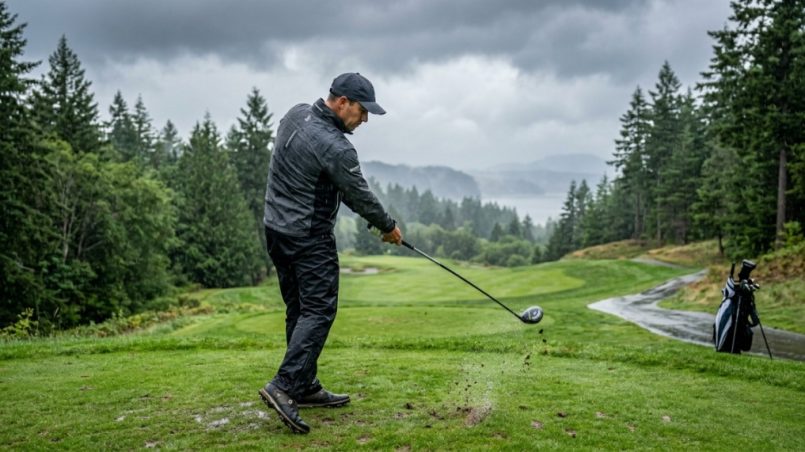
Picture this: You’ve booked a prime weekend tee time at Chambers Bay or Gold Mountain. The forecast calls for a 70% chance of rain—which in Washington actually means a 100% chance you’ll get wet. You show up in a cotton hoodie and a cheap poncho from the gas station. By hole four, you’re soaked, miserable, and gripping a slippery club. Your round is ruined. This scenario plays out every single day across the Evergreen State, and it’s entirely preventable with the right preparation.
The problem isn’t that you don’t own rain gear—it’s that you probably own the wrong rain gear. Washington’s unique climate—ranging from the misty lowlands of Puget Sound to the wind-whipped coastal courses—demands a specific blend of waterproofing, breathability, and mobility. In this guide, we’ll break down exactly what makes gear effective in the Pacific Northwest, how to layer properly, and which features actually matter when you’re standing in a downpour on the 12th fairway. By the end, you’ll know precisely what to look for and where to find top golf rain gear in Washington State that will keep you dry through an entire round.
What Makes Washington Golf Rain Gear Different from Standard Rainwear?
Washington golf rain gear differs from standard rainwear because it must handle prolonged, persistent drizzle rather than short, heavy downpours. The Pacific Northwest doesn’t get the dramatic thunderstorms of Florida or the quick summer showers of Texas—it gets a constant, bone-chilling mist that can last for days. This requires a different design philosophy focused on waterproof breathability and temperature regulation rather than just a waterproof shell.
The Science of Pacific Northwest Precipitation
Washington’s rain is typically a light but continuous drizzle, averaging less than 0.1 inches per hour during most storm events. But it accumulates quickly over 4-5 hours on the course. Unlike a heavy downpour that beads off a cheap jacket, this persistent moisture seeps through poorly sealed seams and zippers. High-quality gear uses taped or heat-sealed seams to prevent moisture ingress from constant exposure.
The “Breathability vs. Waterproofing” Balancing Act
In Washington, you’re likely to be active—walking, carrying your bag, or swinging aggressively. Your body generates significant heat and sweat. If your rain gear traps that moisture (as cheap PVC or coated nylon does), you’ll end up wet from the inside out—which is arguably worse than rain from above. Look for fabrics with a breathability rating of at least 10,000 g/m²/24h (grams of moisture vapor transmission). Higher-end gear often reaches 20,000-40,000 g/m²/24 h.
Why “Waterproof/Breathable” Actually Matters More Than Total Waterproofing
If you get a jacket with a 30,000mm waterproof rating (meaning a 30-meter column of water won’t penetrate the fabric), you’ll stay dry from rain—but you might drown in your own sweat. For Washington golf, a balanced rating around 10,000-15,000 mm waterproof combined with excellent breathability is more effective than maximum waterproofing alone. It allows moisture to escape while still keeping precipitation out.
How Should You Layer Your Rain Gear for Washington Weather?
You should layer using a three-tier system: a moisture-wicking base layer, an insulating mid-layer, and a waterproof, breathable outer shell. This approach adapts to Washington’s temperature swings—often starting in the low 40s in the morning and rising to the mid-50s by early afternoon, while rain persists throughout.
The Base Layer: Merino Wool or Synthetic?
Merino wool is the gold standard for base layers in Washington golf. It regulates temperature better than synthetic fabrics, doesn’t retain odor, and continues to insulate even when damp. However, synthetic fabrics (polyester and nylon blends) dry faster in the car between rounds. For winter golf, opt for a 150-200 gsm (grams per square meter) merino base layer. For spring and fall, a lighter 120-150 gsm weight works better.
The Mid-Layer: Insulation Without Bulk
Choose either a lightweight fleece (around 100-weight) or a thin microfiber mid-layer. Avoid down or thick puffy jackets—they compress under a rain shell and lose their insulating properties when wet. A good mid-layer should wick moisture away from your base layer while trapping a small amount of body heat. It should be breathable enough that you don’t overheat during your swing.
The Outer Shell: What Fit Works Best for a Golf Swing?
Your rain jacket must accommodate a full, rotational golf swing. Look for a “sport cut” or “athletic fit” with articulated sleeves—meaning the arms are pre-curved at the elbow. The shoulders should have extra room for rotation without lifting the jacket hem. Test this by mimicking your swing in the fitting room; if you feel any resistance across the back or shoulders, it will restrict you on the course.
Which Fabrics and Technologies Are Best for Year-Round Play?
The best fabrics for year-round Washington golf are 3-layer laminated waterproof fabrics featuring ePTFE (expanded PTFE) membranes—think Gore-Tex Pro or eVent. These offer the best combination of weather protection, breathability, and durability for constant use. For lighter spring play, a 2.5-layer design reduces weight but sacrifices some durability.
Gore-Tex vs. eVent vs. Proprietary Membranes
Gore-Tex remains the industry benchmark because of its consistent performance and robust warranty. eVent is a direct competitor that offers extremely high breathability—often higher than Gore-Tex—through a different manufacturing process (microporous membrane). Many golf brands (FootJoy, Galvin Green, ProQuip) use proprietary membranes like FootJoy’s DrySoft or Galvin Green’s GORE-TEX. These are proven, but “house” technologies from major brands can also be excellent—just verify the waterproof rating.
What Does “Waterproof Rating” Mean for You?
Waterproof rating measures the water column pressure the fabric can withstand before leaking. Ratings above 5,000mm are considered waterproof. For Washington’s persistent rain, aim for at least 10,000mm. Ratings of 20,000 mm+ (common in high-end gear) provide excellent protection, but focusing solely on this number ignores breathability—something as crucial for comfort.
Seam Taping and Zipper Protection Explained
The seams of your jacket are its weakest point—needle holes from stitching create paths for water. “Taped” seams mean an adhesive, waterproof layer covers the stitches. For cart golfers, you need fully taped seams. A “DWR” (durable water repellent) treatment on the outer face of the fabric causes rain to bead up and run off, preventing the outer layer from getting saturated. Check that your zippers are waterproof—look for “YKK AquaGuard” or similar.
How Do You Choose Between Cart Rain Gear and Walking Rain Gear?
You choose based on your primary method of play. Cart golfers need gear that’s easy to get on and off while seated, with snap-open cuffs and full-zip fronts. Walking golfers need lightweight gear with superior ventilation features like pit zips and mesh-lined vents, because the physical exertion generates more body heat.
Key Features for Cart Golfers: Full Zip, Pockets, and Visibility
When you’re riding in a cart, you benefit from a full-length front zipper that opens completely for easy on/off. Look for fleece-lined hand pockets that are positioned above your waist (so they clear the steering wheel). For Washington’s low-light days, pick a jacket with reflective accents or a lighter color (yellow or bright blue) for visibility, as rain often means gray skies. Beyond protecting yourself from sudden downpours, preserving the condition of the greens is just as important—remember that using golf divot tools helps maintain proper course etiquette, ensuring the fairways remain pristine for everyone, even when playing through wet and muddy conditions.
Key Features for Walkers: Pit Zips, Mesh, and Lightweight Fabric
Walkers should prioritize ventilation. Pit zips (underarm vents that zip open) are essential in Washington, where humidity from the rain—combined with your body heat—can make you feel sticky. Look for reversible zippers that open from both directions to create a vent along the side. Choose a fabric weight between 150 and 200 g (grams per square meter) to keep your walking load manageable.
Hybrid Options for Mixed Play
Many quality spring/fall jackets are designed for both. The standard is a full-zip jacket with pit zips that isn’t too bulky for the cart. The best hybrid gear uses a lighter outer shell (around 120-150 g) with sufficient breathability for walking 9 holes but enough structure to handle 18. Brands like ProQuip and Sunderland have excellent hybrid designs.
Why Is Grip and Flexibility Important in Rain Gloves?
Rain gloves are designed specifically to offer *more* grip when wet, not less. They use a moisture-activated microfiber material that actually increases its adhesive properties against the club handle as it gets soaked, whereas a standard leather glove becomes slippery and laced with water. You should use a waterproof rain glove on both hands.
How to Choose the Right Rain Glove Material
Look for gloves made from “cabretta leather” treated with water-resistant coatings or high-tech microfiber with silicone or rubber prints on the palm. The best approach is the “wet grip” style from FootJoy (RainGrip model) or Zero Friction. They are machine washable and air-dry quickly, which extends their lifespan across multiple rounds in a rainy week.
The “Rain on Rain” Rule: When You Add a Waterproof Outer Glove
On top of your rain glove, you can add an outer waterproof glove (like a rubberized overshoe style for hands) for extreme downpours. This is rare in Washington, but useful during the winter months. However, most golfers find a single layer of a wet-grip glove sufficient, as adding a thick outer layer reduces your feel and tactile feedback on the putt.
How Important Are Waterproof Trousers for the Full Round?
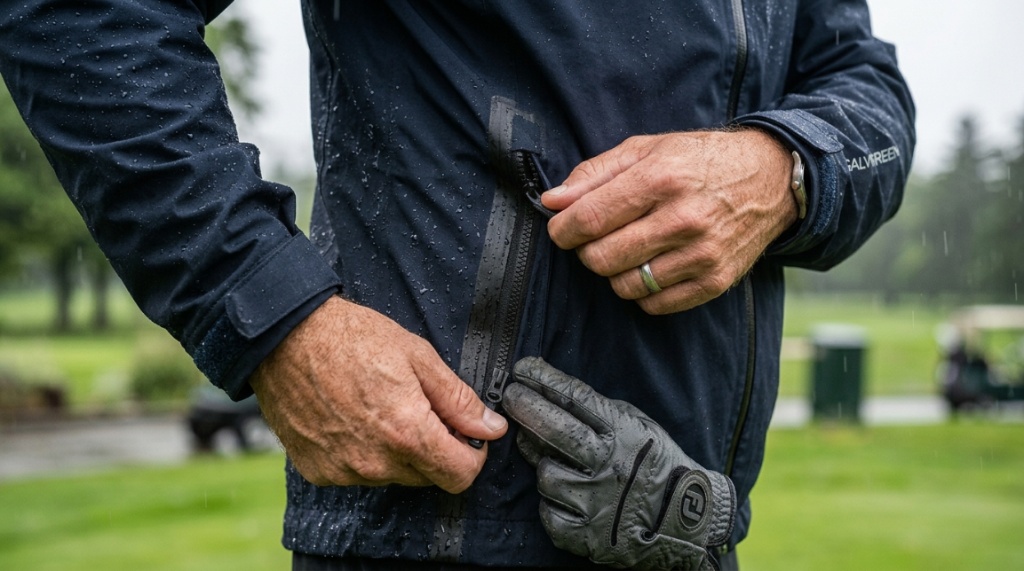
Waterproof trousers are just as important as your jacket. In Washington, you’re not just standing in rain falling from above—you’re splashing through puddles and walking on saturated ground. Forgetting your rain pants means your lower legs and knees get soaked, which quickly chills you and ruins your swing’s comfort.
Gusseted Seats vs. Snow Pants: What’s the Difference?
Golf rain trousers feature a gusseted crotch and sometimes a dropped back (covering your lower back when you bend). Golf-specific trousers should allow a full knee bend and perfect a golf posture where you bend from your hips, not your waist. Snow pants are too bulky, too insulated, and restrict hip rotation—making them dangerous for a golf swing. Ensure your trousers have a full-length zipper with a waterproof flap over the fly.
Ankle Cuffs and Zippers for Cart Use
Check the leg opening. If you wear golf shoes with spikes and walk a lot, choose trousers with a zipper that runs from the ankle to the knee. This allows you to get them on and off without having to take off your golf shoes. For cart users, a simple elasticated or neoprene cuff that sits over your shoe is ideal to keep water off your socks.
Can You Play in Heavy Wind and Rain Together?
Yes, you can—but this is when the combination of technology and clothing fit becomes vital. Wind chill is a major factor in Washington’s coastal areas and in the open, windy courses near Puget Sound. A rain jacket that is “waterproof” but not windproof will feel cold because the wind penetrates the fabric and cools your body quickly.
The Role of a Windproof Outer Shell
Look for rain gear that incorporates a windproof membrane as part of its construction, like Gore-Tex Infinium (which is designed for windproofing, though often with less waterproofing than standard Gore-Tex) or a simple 2-layer nylon with a dense weave. If you’re facing constant low-40s temps and 15 mph winds, you need that extra layer of protection. Don’t rely on just a mid-layer fleece; it won’t block the fierce Bellingham winds.
Controlling the Drip Factor: Hoods, Collars, and Caps
Your head and neck are the primary areas where water enters. Most rain jackets have a fold-away hood. In Washington, wearing a simple baseball cap under your hood is the smartest move—it keeps rain off your lenses and maintains a shelf to keep water away from your face. High collars that stand up to your ears are essential. Ensure the collar has a soft fabric lining so it doesn’t chafe during your backswing.
How Should You Care for Your Rain Gear to Extend Its Life?
Proper care is essential to maintain the waterproof coating (DWR). Your gear won’t last forever—the DWR treatment washes off over time, even from high-end products. Revitalizing the DWR and cleaning the fabric, rather than machine washing with harsh detergents, is the secret to longevity.
Washing and Drying Guide (Avoid These Mistakes)
Wash your rain jacket and trousers with a technical cleaner that is free of detergents, fabric softeners, and bleach. Use a gentle cycle on cold water. Never use a dryer with a heat setting—this will melt the membrane or damage the layer bonding. Instead, air-dry your gear. To reactivate the DWR coating, you may iron on a low setting (using a towel between the iron and the jacket) or tumble dry on a no-heat setting for 20 minutes—this re-melts the DWR particles to the surface.
When Should You Reapply DWR?
You’ll know you need to reapply DWR when water stops beading up on the fabric surface and instead soaks into the outer layer, even if it doesn’t leak through immediately. To reapply, wash the garment, then spray it with a Nikwax or Revivex DWR treatment, and allow it to cure. This should be done every 2-3 washings or once a season for heavy users.
What Should You Budget for Quality Rain Gear?
You should budget between $150 and $400 for a quality jacket and $100 to $250 for matching trousers. Entry-level tech from brands like FootJoy (DryJoys line) starts around $100 for the jacket. Mid-range (ProQuip, Sunderland) sits at $150-$250. High-end (Galvin Green, Gore-Tex Pro models from any brand) can exceed $400. In Washington, this is not a luxury—it’s a necessary investment for playing year-round.
Is Expensive Gear Worth It for Weekend Golfers?
If you play more than once a month in the rain (common in Washington), yes, the higher tier is worth it. The primary difference is usually breathability and durability. High-end gear uses better membranes that don’t break down as quickly, and the stitching/finish is far superior, preventing leaks. If you only play a few rainy rounds a year, a mid-range option might suffice. We highly recommend checking out detailed reviews and comparisons on top golf rain gear in Washington State to see what fits your playing style and budget before purchasing.
Which storage solutions keep gear dry between rounds?
Quality storage is just as vital as the gear itself. After a soaked round, you can’t just throw your jacket in a ball in the trunk of your car. If you want your “top golf rain gear in Washington State” to last longer, proper drying and storage between rounds are non-negotiable.
How to Dry Gear Out Effectively
Hang your rain gear inside out in a well-ventilated area at room temperature. Never place it near a fireplace or radiator—extreme heat damages the waterproof membrane. Allow it to dry completely. This helps the DWR coating to remain active and prevents mildew from growing in the folds of the fabric. Use a dedicated hanger in a closet specifically for this purpose.
Investing in a Waterproof Golf Bag vs. a Golf Cart Bag
If you walk, a sealed, waterproof cart bag is worth the money. Many Washington golfers carry umbrellas that clip onto the bag. However, a true waterproof bag (with sealed zipper closures) keeps your spare gloves, wallet, and extra layers dry. If you mostly ride, a standard cart bag is fine, but always bring a packable rain cover for the bag itself.
Frequently Asked Questions
Do I really need waterproof trousers for a Washington golf round?
Yes, if you want to stay fully dry. Rain in Washington is constant, and your legs will quickly soak through cotton trousers or denim. Waterproof golf trousers are lightweight, breathable, and designed for a full golf swing, making them essential for comfort and performance.
Can I wear a ski jacket for golf in heavy rain?
Most ski jackets are too bulky, heavy, and insulated for golf swings. They handle snow and cold, but not the persistent, wet drenching rain of Washington. Golf-specific jackets have better breathability, lighter fabrics, and a more athletic fit that allows unrestricted movement.
Are umbrellas effective in Washington’s windy areas?
An umbrella can be useful, but not in open courses prone to wind like Chambers Bay or those on the Olympic Peninsula. Use a compact, windproof umbrella designed for golf, which handles light rain and minimal wind, but rely on quality clothing as your primary defense and carry an umbrella only as a backup.
How can I keep my grips dry during a rainy round?
Keep a towel in a waterproof pouch or clipped under your umbrella. Dry your grip thoroughly between shots. Use a synthetic, non-woven golf glove (rain glove) on both hands, which provides more grip when wet, and grip the club slightly firmer to maintain control.
When should I re-waterproof my golf rain gear?
When you notice water soaking into the outer fabric instead of beading up, it’s time to reapply DWR. This often happens after a few washes or after heavy use during a rough winter season. Always wash and re-treat your gear before storing it for the summer.
Is it better to have one expensive set or two mid-range sets?
In Washington, one high-quality set is sufficient. The primary benefit of expensive gear is breathability and durability, not just waterproofing. If you can afford it and play frequently, one top-tier set from a reputable brand is a more effective long-term investment than two cheaper alternatives.
Does wearing a rain jacket affect club swing speed?
Yes, a restrictive jacket can reduce your swing speed. Look for a “sport cut” jacket, which has pre-curved sleeves and extra shoulder fabric. This prevents the jacket from pulling or hindering your arm rotation, allowing you to maintain your natural swing tempo and club head speed.
Conclusion
Staying dry in Washington State isn’t about avoiding the rain—it’s about embracing it with the right equipment. The key takeaways are clear: prioritize breathability over sheer waterproof ratings, invest in a proper three-layer system, and choose gear designed for a full golf swing. From a 3-layer Gore-Tex jacket to lightweight waterproof trousers and moisture-activated rain gloves, each piece plays a vital role in keeping you comfortable, focused, and playing your best golf.
Don’t let a drizzle dictate your schedule. An ideal response is to assess your current bag and replace the weakest links in your rainwear arsenal. Start with the essentials—a waterproof shell and trousers—then add the accessories like rain gloves and a cap. Your local golf shop or an online retailer like the one linked above should carry top-tier options. Take the time to do your research and buy once, buy right. The Evergreen State offers beautiful golf throughout the year, and you should be out there enjoying it, dry and confident.