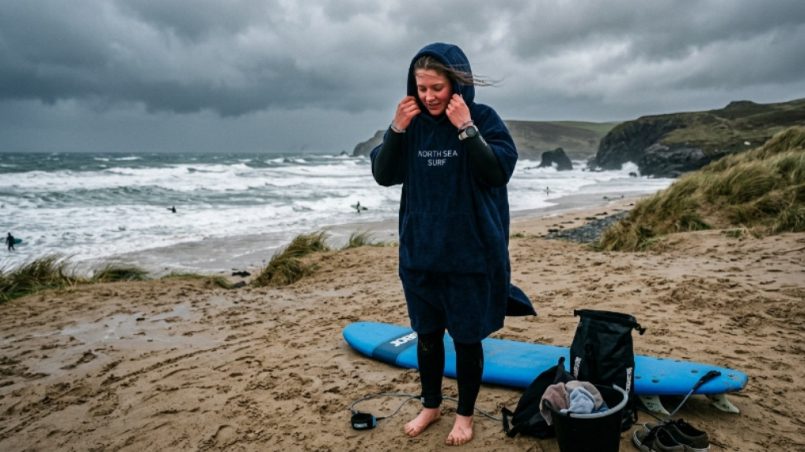
Starting out in surfing is exciting. The ocean calls, the waves look perfect, and you cannot wait to get in the water. However, what happens after your session matters just as much as the session itself. Standing on a cold, windy beach in a wet wetsuit is uncomfortable. That is exactly where a surf poncho comes in. For beginners, it is one of the most practical purchases you can make. This guide will help you choose the right one from the start.
What Is a Surf Poncho and Why Do You Need One
A surf poncho is an oversized, hooded towel designed to help surfers change clothes and dry off at the beach. It looks like a large pull-over with a hood and an open bottom. You slip it over your head, and suddenly you have a private changing space no matter where you are.
Most ponchos are made from towelling material or microfiber fabric. They absorb water quickly and provide warmth after a cold session in the sea. Additionally, they are easy to carry in a surf bag, which makes them ideal for beach trips.
For anyone just starting out, a poncho solves a very real problem. Changing out of a wetsuit on a public beach without one is awkward and cold. Therefore, it ranks as one of the first items worth buying alongside other entry-level surf gear like a leash and wax.
The Difference Between a Surf Poncho and a Regular Beach Towel
You might be wondering why you cannot just use a regular towel. The answer is simple: a standard towel does not give you privacy or warmth at the same time. You would need two hands to hold it around yourself while trying to change. That is difficult and often results in an embarrassing moment.
A surf poncho stays on by itself. You can dry off, warm up, and change your clothes underneath it — all hands-free. The hood also helps dry your hair and keeps wind off your head, which matters a lot after a long session in cold water.
Additionally, most regular towels are too bulky to stuff into a beach bag easily. Microfiber ponchos, in particular, fold down to a very compact size. This makes them far more practical for anyone who travels to the beach regularly.
Key Features to Look For When Buying a Surf Poncho
Not all ponchos are the same. Knowing what to look for will save you money and prevent disappointment. Here are the most important features to consider.
Material is the first thing to check. Towelling cotton ponchos are warm, soft, and highly absorbent. They are great for colder climates and autumn or winter surfing. Microfiber ponchos dry faster and pack down smaller. They are better suited to warmer weather and travel.
Size matters more than people expect. A poncho that is too short will not cover you properly when you need to change. Look for a model that reaches at least to mid-thigh. Some longer styles drop to the knee, which gives even more coverage and warmth.
The hood design also plays a role. A deep, wide hood will absorb water from your hair and help you warm up faster. A shallow hood that barely covers your head is less useful after a cold surf session.
Pockets are a useful bonus. Some ponchos include a front kangaroo pocket. This gives you a place to warm your hands between waves or store small items like a car key.
Finally, check the quality of the seams and stitching. A poorly made poncho will fray or lose shape after a few washes. Look for double-stitched seams, which last far longer.
Choosing the Right Size for Your Body
Sizing can feel confusing because ponchos are not fitted garments. Most brands offer small, medium, large, and extra-large. However, the sizing usually refers to overall length and shoulder width rather than a traditional fit.
As a general rule, taller people should go one size up to ensure proper coverage. Children have specific kids’ ponchos available, which are shorter and narrower. These fit better and are easier for young surfers to use on their own.
If you are between sizes, it is usually better to go larger. A slightly oversized poncho is easier to change inside and feels less restrictive. A poncho that is too small defeats the purpose entirely.
The Best Fabrics for Different Surfing Conditions
The fabric you choose should match the conditions where you surf. This is one of the most overlooked beginner surfing tips, but it makes a genuine difference to your comfort.
If you surf in cold water or during winter months, a thick cotton towelling poncho is the better choice. Cotton holds heat well. It feels warm and cosy even when the wind picks up on the beach. The trade-off is that it takes longer to dry and is heavier to carry.
If you surf in warm water or tropical destinations, a microfiber poncho is more practical. It dries in minutes, weighs almost nothing, and packs into a pouch no bigger than a water bottle. However, it does not offer as much warmth, so it is less suitable for cold conditions.
Some ponchos use a blend of cotton and synthetic fibres. These offer a middle ground — reasonably warm, reasonably quick-drying, and lighter than pure cotton. For beginners who surf in mixed conditions, a blended fabric poncho is often the most versatile option.
How Much Should You Spend on a Surf Poncho
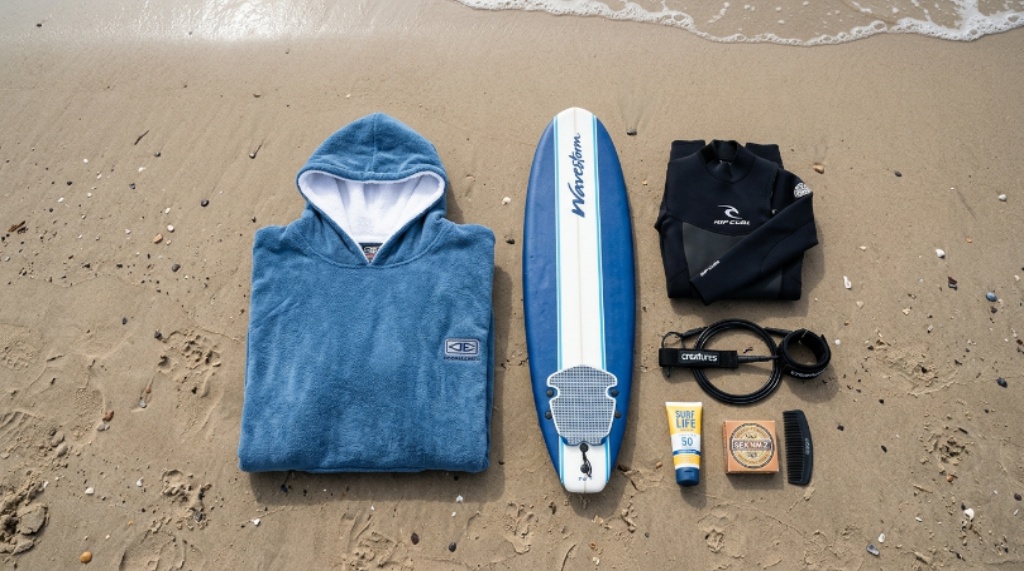
Price varies widely. Budget ponchos start at around $20 to $30. Mid-range options sit between $40 and $70. Premium surf brands charge $80 or more for their top models.
For beginners, the mid-range is usually the sweet spot. You get good quality materials and solid construction without overspending on a feature you are still getting used to. As part of your beach essentials kit, a reliable mid-range poncho will last several seasons with proper care.
That said, the cheapest options are not always bad. Some budget ponchos perform surprisingly well. Read reviews carefully, check the fabric weight, and look at the stitching quality before buying. A $25 microfiber poncho from a reputable brand may outperform a poorly made $60 option from an unknown manufacturer.
Avoid buying purely based on brand name when you are starting out. Instead, focus on fabric, size, and construction. Those three factors matter more than the logo on the label.
How to Care for Your Surf Poncho
Proper care will extend the life of your poncho significantly. Most cotton and microfiber ponchos are machine washable. However, always check the care label before washing.
Wash your poncho in cold or warm water, not hot. High heat can damage microfiber fibres and cause cotton to shrink. Use a gentle detergent and avoid fabric softeners. Softeners can clog the fibres of microfiber fabric and reduce its absorbency over time.
Dry your poncho by hanging it in the open air when possible. This is kinder to the fabric than a tumble dryer. If you do use a dryer, choose a low heat setting. After washing, give the poncho a good shake to keep the fabric fluffy and soft.
Rinse your poncho with fresh water after every beach session. Salt and sand build up in the fabric over time, which causes it to wear out faster. A quick rinse at the beach shower or at home makes a big difference to how long it lasts.
Why a Surf Poncho Is Worth It From Day One
Some beginners put off buying a poncho, thinking it is not urgent. In reality, you will wish you had one after your very first session. Changing out of a cold, wet wetsuit on a windy car park is miserable without one.
A poncho is also one of the most affordable pieces of entry-level surf gear available. Unlike a surfboard or a wetsuit, it does not require a big investment. Yet it delivers comfort and convenience every single time you use it.
Moreover, it works beyond surfing. Ponchos are just as useful after swimming, kayaking, paddleboarding, or a day at the beach with kids. Therefore, it is a purchase that adds value to many different outdoor activities, not just surfing.
Conclusion
Picking the right surf poncho as a beginner comes down to a few simple choices. Think about where you surf and how cold it gets. Choose cotton for warmth, microfiber for travel and warm weather, or a blend for versatility. Make sure the size gives you enough coverage to change comfortably, and check that the stitching is built to last.
You do not need to spend a fortune. A reliable mid-range poncho will serve you well through your early sessions and beyond. It is a small addition to your kit that makes a surprisingly large difference to your time at the beach.
Getting the basics right from the beginning sets you up for a better experience in the water and out of it. A good poncho is one of those basics — simple, practical, and absolutely worth it.
Frequently Asked Questions
Can I use a surf poncho if I do not wear a wetsuit?
Yes, absolutely. A poncho is useful for anyone who wants to dry off and change at the beach. Even if you surf in boardshorts or a swimsuit, a poncho adds warmth and privacy when you are done.
What size surf poncho should a child use?
Look for a poncho specifically labelled as a kids’ size. These are shorter and narrower than adult versions, which makes them easier for children to put on and use independently. Most kids’ ponchos fit children aged 2 to 12, with some brands offering separate toddler and junior sizes.
How do I know if a poncho is good quality without trying it first?
Check the fabric weight in grams per square metre (GSM) if listed. A higher GSM means a thicker, more absorbent fabric. Also look at customer reviews that mention durability after multiple washes. Double-stitched seams are a positive sign of quality construction.
Are surf ponchos unisex?
Most surf ponchos are designed to be unisex and fit a range of body shapes. Some brands offer styles with slightly different cuts or colourways marketed toward men or women, but the functionality is the same. Choose based on size and coverage rather than the gender label.
Can I take a surf poncho on a plane?
Yes. Microfiber ponchos in particular pack down very small and fit easily into carry-on luggage. Even cotton ponchos are compact enough to bring along without using much space. They are a practical item to take on any surf trip abroad.
Related Topics:
How to Choose Safe and Comfortable Swimwear for Active Women