You paddle out on a glassy morning in San Diego, and by noon the same stretch of water is a washing machine. Nothing about your board changed — the weather did. California is one of the most rewarding places in the world to stand-up paddleboard, but it is also one of the most weather-sensitive, because you can face offshore fog in the morning, a strong afternoon sea breeze, cold Pacific upwelling, and long-period swell from a storm thousands of miles away, all in a single day. Understanding how wind, swell, tide, fog, and water temperature actually interact with your session is the difference between a great paddle and a dangerous one. If you are still sorting out your setup, this view full guide covers board and gear choices that pair well with California’s coastal conditions.
Quick Answer
Weather affects paddleboarding in California mainly through four forces: wind (especially afternoon sea breezes and offshore Santa Ana winds), swell and wind chop, tide, and water temperature driven by upwelling. The safest window is usually early morning, before the sea breeze builds, when winds are light and the ocean is calmest. Fog, wind against tide, and cold-water shock are the most underestimated risks. Check wind speed and direction, swell height and period, tide, and water temperature within 12–24 hours of paddling, and skip the session if wind is forecast above roughly 15 mph.
Key Takeaways
- Wind is the single biggest factor in whether a California paddle is enjoyable or exhausting; morning is usually calmest because the afternoon sea breeze has not yet developed.
- Swell and wind chop are different problems: long-period groundswell creates energy and surge near shore, while short-period wind chop makes the surface bouncy and hard to balance on.
- Tide matters most at inlets, harbors, estuaries, and reef breaks, where a falling tide can strand you or expose shallow rocks.
- Cold water is a year-round California reality due to upwelling, so plan for water temperatures well below air temperature.
- Fog, offshore winds, and wind-against-tide conditions are the situations most likely to turn a casual paddle into an emergency.
Why California Weather Is Unusually Tricky for Paddleboarders
California sits at the edge of the North Pacific, which means its coastal weather is driven by large-scale systems rather than local randomness. Two mechanisms do most of the work.
The first is the marine layer. Cool, moist air over the ocean meets warmer inland air, producing the low coastal fog and overcast that dominates many spring and early summer mornings from San Francisco down to San Diego. The second is the sea breeze. As the land heats up during the day, air rushes from the cooler ocean toward the warmer interior, creating onshore wind that typically builds through the late morning and peaks in the afternoon. This is why a paddle that felt effortless at 7 a.m. can feel like a treadmill workout at 2 p.m.
Superimposed on those patterns are swells generated by distant North Pacific storms, occasional Southern Hemisphere swell in summer, and regional wind events like Santa Ana conditions, which push dry, offshore wind from the interior toward the coast.
Wind: The Factor That Decides Most Sessions
If you track only one variable, track wind. Wind does three things at once: it pushes you, it chops up the surface, and it makes falling in more likely because you are constantly correcting your balance.
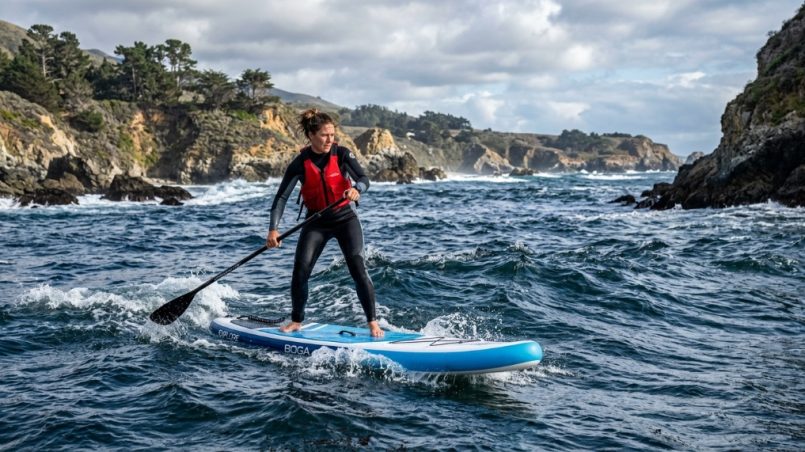
Wind direction matters as much as speed. An onshore wind (blowing from the ocean toward land) pushes you back toward the beach, which is annoying but generally safer. An offshore wind (blowing from land toward the ocean) pushes you away from shore, and if it strengthens while you are out, returning can become genuinely difficult. Santa Ana events in Southern California can produce strong offshore winds, and they are not a good time for recreational paddling.
As a rough guide:
- Under about 5 mph: Near-glassy conditions, ideal for beginners, flatwater, and photography.
- 5–10 mph: Manageable chop; fine for experienced paddlers, less comfortable for beginners.
- 10–15 mph: Noticeable chop and real effort to paddle upwind; workable only close to shore or in sheltered water.
- Above roughly 15 mph: Not recommended for recreational paddleboarding, especially offshore or far from shore.
These are guidelines, not absolutes. A 12 mph wind in a protected bay is a different experience from 12 mph on open coast, and your own fitness and board stability change the calculus.
How Swell and Wind Chop Affect Stability and Safety
Swell and wind chop are often lumped together, but they behave differently and demand different responses.
Swell is organized, long-period energy that travels from distant storms. Long-period swell carries more energy per wave and tends to produce larger, more powerful breaking waves near shore, plus surge and backwash in harbors and river mouths. Even if the surface looks calm in deep water, a long-period swell can make the shoreline unpredictable.
Wind chop is short-period, messy, and local. It forms when wind blows across the water and rarely produces dangerous breaking waves, but it makes the surface bumpy enough to challenge your balance and slow your forward progress.
For paddleboarders, the practical distinction is this: chop is a comfort and energy problem, while swell is primarily a safety and launch/landing problem. A two-foot wind chop in a bay is annoying. A two-foot long-period swell breaking on an exposed beach can be hazardous, after your session on the water, stay warm and dry by checking out our guide on how to pick the right surf poncho for beginners in surfing.
Tides and Currents: Small Changes, Big Consequences
Tide is the most commonly ignored weather-adjacent factor, and it causes a surprising number of avoidable problems.
In open water, tide height alone rarely changes much. But in specific locations it matters enormously:
- Estuaries and river mouths: Strong tidal currents can carry you faster than you can paddle against them, especially on a spring tide.
- Harbors and channels: Currents accelerate where water is forced through narrow openings.
- Reef breaks and rocky shorelines: A falling tide can expose shallow rock that was submerged when you launched.
- Beach launches: A very low tide can create a longer walk and steeper shorebreak; a very high tide can shorten your usable beach and push waves into areas you did not expect.
“Wind against tide” is a specific condition worth remembering. When wind blows opposite to a strong tidal current, the water surface becomes steep, confused, and much harder to paddle than either factor alone would suggest. It is one of the clearest signals to stay on shore.
Fog, Air Temperature, and Cold Water
California’s marine layer fog is beautiful and genuinely hazardous. Visibility can drop to a few hundred feet within minutes, and it frequently forms and clears on a schedule that has little to do with when you launched. If you paddle into fog without a way to navigate back, you can easily lose your orientation.
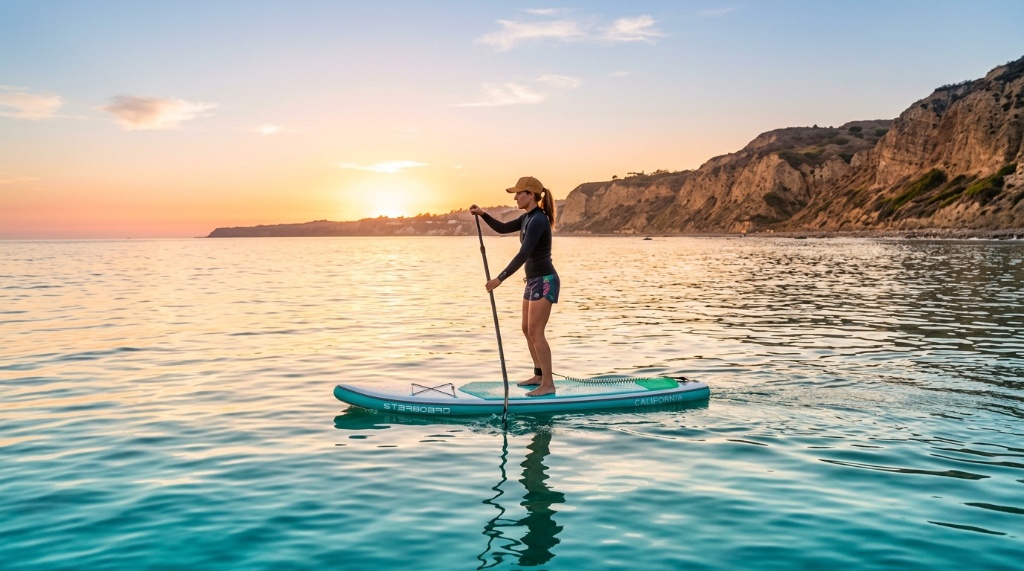
Air temperature is also misleading. A sunny 75°F afternoon on the coast can coincide with water in the low-to-mid 50s°F. Pacific upwelling pulls cold, nutrient-rich water to the surface along much of the California coast, which is why the ocean here is consistently cooler than most visitors expect.
Cold water matters because of cold shock. Sudden immersion in cold water can trigger an involuntary gasp and rapid breathing, which is dangerous if your head goes underwater unexpectedly. A wetsuit or appropriate cold-water gear is not optional in much of California, even in summer.
Fog, Wind, and Sun: Session-Planning Scenarios
Weather data becomes useful when you translate it into decisions. Here are three realistic patterns.
Scenario 1 — Glassy morning, building afternoon wind. Forecast shows 4 mph wind in the morning rising to 15 mph by 2 p.m. Paddle early and plan to be back before the sea breeze fills in. This is the classic California window.
Scenario 2 — Long-period swell with light wind. Wind is calm, but a long-period swell is running. Open-coast launches will have larger, more powerful shorebreak. Choose a sheltered harbor, bay, or protected launch instead of an exposed beach.
Scenario 3 — Fog with a falling tide. Fog limits visibility and a falling tide increases current in an estuary. This combination is a strong reason to postpone. If you do go, stay in a small, familiar, well-marked area and carry a way to navigate.
Practical Pre-Paddle Weather Checklist
Run this within 12–24 hours of your session, and re-check the morning of.
- Check wind speed and, critically, wind direction for your specific launch and the hours you plan to be out.
- Check swell height, period, and direction. Long period plus short period means more energy near shore.
- Check the tide chart for your location, especially if you are near an inlet, harbor, or reef.
- Check water temperature and dress for immersion, not for air temperature.
- Check for fog in the forecast and for any small craft advisories.
- Identify an exit point downwind in case the wind strengthens while you are paddling.
- Tell someone your plan and expected return time.
Frequently Asked Questions
What is the best time of day to paddleboard in California?
Early morning is generally best because the sea breeze has not yet developed and winds are typically lightest. This also often means the marine layer is present, so check visibility. Late afternoon is usually the windiest and choppiest part of the day.
What wind speed is too strong for paddleboarding?
There is no single universal number, but many recreational paddlers find winds above roughly 15 mph difficult and uncomfortable, especially on open coast. In sheltered water, higher winds are more manageable. Offshore winds are riskier than onshore winds at the same speed.
Do I need a wetsuit to paddleboard in California?
In most of California, yes, at least for part of the year. Water temperatures are often in the 50s°F even when the air is warm, and upwelling keeps coastal water cold. A wetsuit protects against cold shock and extends your safe time in the water.
How does tide affect paddleboarding?
Tide matters most in estuaries, harbors, channels, and near reefs. Strong tidal currents can carry you faster than you can paddle, and a falling tide can expose shallow rocks. On open beaches, tide mainly affects the walk to the water and the shape of the shorebreak.
Is fog dangerous for paddleboarding?
Yes. Fog can reduce visibility to a few hundred feet and can form or clear quickly. If you paddle in fog, stay in a small, familiar area, carry a way to navigate, and avoid crossing open water where you could lose your orientation.
Can I paddleboard in California in winter?
Yes, and winter can offer some of the cleanest, emptiest conditions. However, winter brings larger North Pacific swells, colder water, and more frequent storm systems. Conditions can change fast, so check forecasts closely and dress for cold water.
Conclusion
Weather is not background noise for California paddleboarding — it is the main variable that determines whether your session is fun, frustrating, or risky. Wind decides most sessions, swell and chop dictate comfort and safety near shore, tides control currents in specific locations, and cold water and fog are the quiet hazards. Build the habit of checking wind direction, swell period, tide, water temperature, and fog within a day of paddling, and lean toward early mornings. If any one factor looks marginal, especially offshore wind or wind against tide, the smart choice is usually to wait for a better day.